01
Emergency Furnace Repair
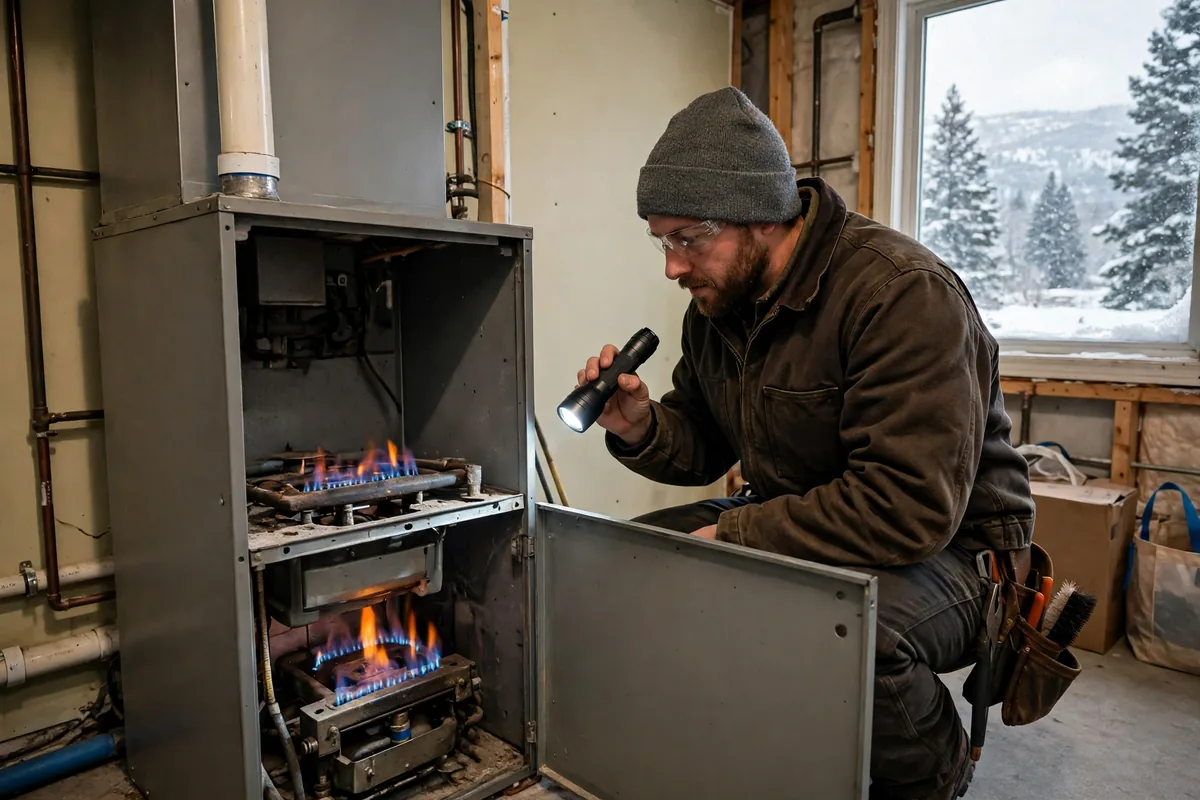
A Casper emergency call usually means a furnace that quit on a cold valley night, so we start with ignition, venting, and airflow before anything else.
Oil City warmth
Casper grew up on oil, refining, and rail, and its homes show that history: solid mid-century houses near the North Platte, newer streets climbing the east side, and plenty of basements and crawl spaces. A furnace here has to hold steady through long cold nights when the river valley traps cold air and the wind off the mountain cuts across town.
The calls we hear most in Casper start the same way: one end of the house stays cold, the furnace runs and runs, or the unit stops on the coldest night of the month. Those symptoms usually trace back to ductwork, airflow, or a part worn down by long run hours, and we check the whole system before we name the fix.
Casper houses
Casper housing mixes post-war homes near the river with later subdivisions and new builds on the east side, and many of the older homes have basements where the furnace lives and crawl spaces where ducts run. Ducts in a cold crawl space lose heat all winter, so a Casper visit often includes a look under the house, not just at the furnace cabinet, and sealing or insulating a run can warm a room more than any part swap.
The energy industry shapes Casper work schedules too: shift workers sleep during the day and need bedrooms warm at odd hours, and rental homes near the college and the hospital turn over often. We keep that in mind when we set thermostats and zones, since a furnace that suits a daytime household may leave a night-shift bedroom cold.
Casper cold
Casper sits in the North Platte valley at about 5,150 feet, and cold air pools along the river on still nights while wind spills off Casper Mountain on others. That combination means furnaces run long hours, and a small airflow problem that hides in October shows up as a cold bedroom in January. We give close attention to return air and duct runs, because a furnace cannot heat rooms its ducts cannot reach.
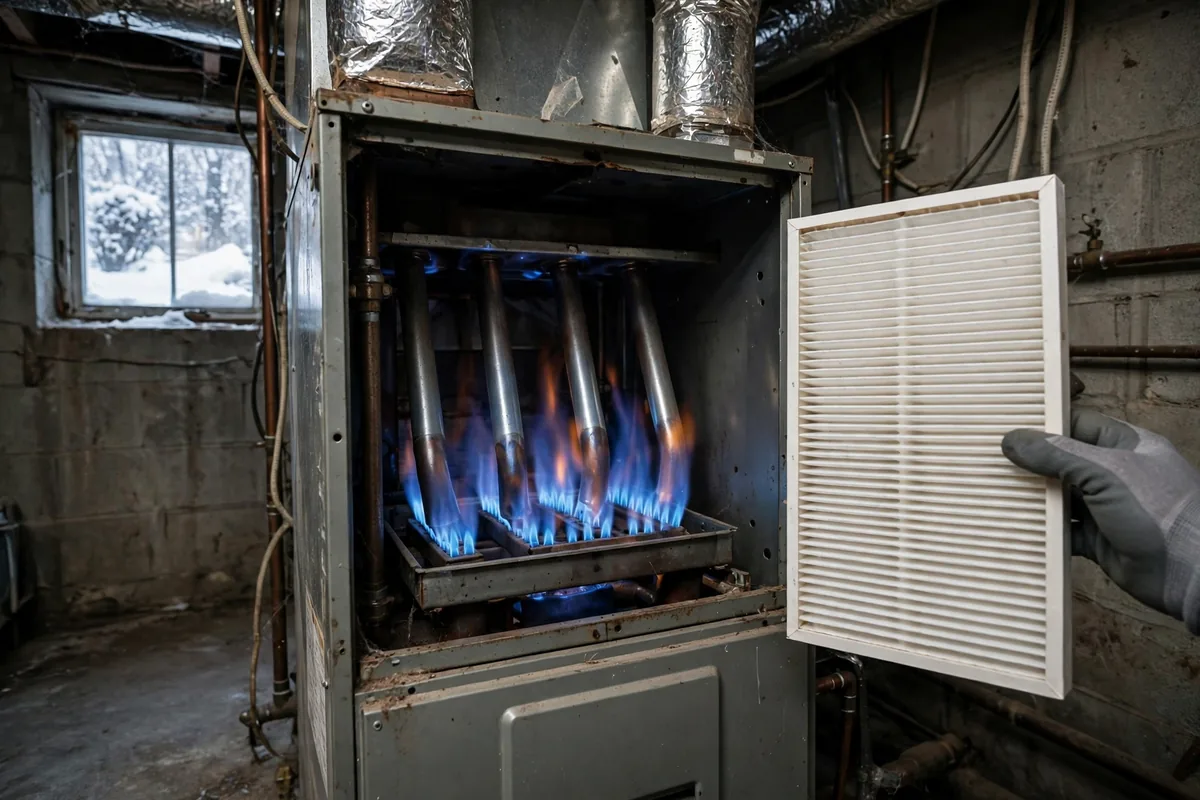
Snow and ice add a Casper twist: sidewall vents on newer high-efficiency furnaces can ice over or drift shut, and older chimneys can draft poorly when a cold inversion sits over the valley. A furnace that locks out after a snow, or one that smells odd on startup, deserves a venting check before anything else, since venting trouble is both common here and unsafe to ignore.
Casper landmarks
Casper is easy to find your way around: Fort Caspar sits near the river crossing that gave the city its name, the National Historic Trails Interpretive Center stands on a hill above town, and Casper Mountain rises to the south with the airport to the north. Interstate 25 runs through town, and the North Platte River bends along its edge, so most addresses sit north or south of the river and east or west of the interstate.
Those landmarks help us plan a visit, because homes near the river tend to be older and lower, while homes climbing toward the mountain face more wind and colder nights. Naming the nearest landmark when you call gives us a head start on the house type and the weather your furnace is fighting.
Three Casper landmarks mark the map for us: Fort Caspar Museum near the river, the National Historic Trails Interpretive Center above town, and Casper Mountain to the south. Most calls come from streets within a short drive of one of them.
Casper furnace blowing cold or not starting? Call us and describe the sound and the symptom.
Call (307) 309-8601Casper areas
Casper neighborhoods each carry their own furnace story. The Old Yellowstone District and downtown hold older homes with long duct runs, Paradise Valley and Garden Creek mix established streets with newer builds, and the CY Avenue corridor serves newer subdivisions where a furnace may be heating a larger, tighter house than the older homes nearby.
Mills, Evansville, and Bar Nunn sit just outside Casper proper but share its weather and its housing stock, with many ranch homes and manufactured homes mixed in. When you call from one of those towns, tell us the house type as well as the street, because a manufactured-home furnace and a basement furnace fail in different ways and need different parts on the truck.
We serve Casper and its neighboring towns across Natrona County, including these areas.
Downtown CasperOld Yellowstone DistrictParadise ValleyGarden CreekCY Avenue areaHartrandtBrookhurstMillsEvansvilleBar Nunn
Casper ZIP codes we cover: 82601, 82602, 82604, 82605, 82609.
Casper seasons
Casper furnaces fail most often at two moments: the first deep cold in late fall, when a weak igniter or flame sensor finally gives out, and the long January stretch, when a blower motor tired from weeks of running stops altogether. Both moments share a warning sign worth heeding: rooms that cool unevenly, a furnace that cycles on and off in short bursts, or a new noise from the blower cabinet.
Spring in Casper brings meltwater and mud, which matters for furnaces in basements and crawl spaces, since damp ducts and damp filters choke airflow. Summer is the calm season for furnace work, and a tune-up then can replace a tired capacitor or clean a burner before fall. The EPA indoor air pages at epa.gov explain why clean filters and sound venting matter for indoor air, and we check both on every Casper visit.
Furnace help
Casper needs every kind of furnace work, from emergency calls on river-valley cold nights to planned replacements in east-side subdivisions. Each line below is written for Casper homes.
01
A Casper emergency call usually means a furnace that quit on a cold valley night, so we start with ignition, venting, and airflow before anything else.
02
Installing a furnace in a Casper basement means planning duct runs through cold crawl spaces, where heat loss can undo a good new unit.
03
When a Casper furnace has failed three winters running, replacement with a unit matched to the house beats another winter of patchwork repairs.
04
A Casper tune-up in early fall checks the igniter, flame sensor, and blower before the long river-valley cold settles in for months.
05
Gas furnaces dominate Casper, and valley inversions make venting and combustion checks more important here than in a windy open town.
06
Electric furnaces in Casper apartments and additions fail quietly, with one dead element leaving a whole zone lukewarm while the rest of the home heats.
07
Rural homes outside Casper run on propane, and a cold snap exposes low tanks and weak regulators faster than a mild week ever would.
08
Casper blower motors wear from long winter run hours, so a humming or grinding blower gets a full airflow check, not just a new motor.
09
A heat exchanger crack in Casper often announces itself with soot or a flame that dances oddly, and we treat any sign of it as urgent.
10
Thermostats in Casper homes near sunny south windows misread the house, so we check placement before we blame the furnace for uneven rooms.
11
Ductwork through Casper crawl spaces leaks heat all winter, and sealing a run can warm a far bedroom more than a larger furnace would.
12
A Casper safety inspection looks hard at chimneys and sidewall vents, since cold valley air can stall a draft that worked fine in summer.
13
Manufactured homes in Mills, Evansville, and Bar Nunn use compact furnaces with crossover ducts, and we check those ducts whenever heat fades at one end.
14
Casper offices, shops, and clinics need commercial heat that holds through long hours, so we test controls and zones as one system.
15
Zone controls suit Casper homes with a cold river-side room and a warm upper floor, by steering heat to the rooms that actually need it.
Casper symptoms
Casper furnaces work long nights in pooled river-valley cold, and the symptom usually points at one part of the system. Read the pattern before you call, and tell us which rooms are involved.
| Symptom | What it usually means | What to do |
|---|---|---|
| Far rooms stay cold while rooms near the furnace warm up | Heat is leaking out of long duct runs or crawl-space ducts before it reaches the far end of the house. | Note which rooms are cold and whether a room over a garage is worst, then check the filter and call with that room pattern. |
| The furnace starts and stops in short bursts | A clogged filter, a blocked return, or a limit switch tripping on overheating can all cause short cycling. | Check the filter and keep returns clear. If the bursts keep going through a cold week, book a visit before the pattern wears a part out. |
| The furnace stops after a snow | Snow or ice may have drifted over a sidewall intake or exhaust pipe, tripping a safety switch that locks the unit out. | Clear snow gently from the outside pipes and see if the unit restarts. If it locks out again, call, since repeated lockouts point to venting trouble. |
| A new noise comes from the blower cabinet | Blower parts wear down over long Casper run hours, and a hum or grind is often the first sign. | Note when the noise happens, whether at startup or all through the cycle, and book a visit while the blower still runs. |
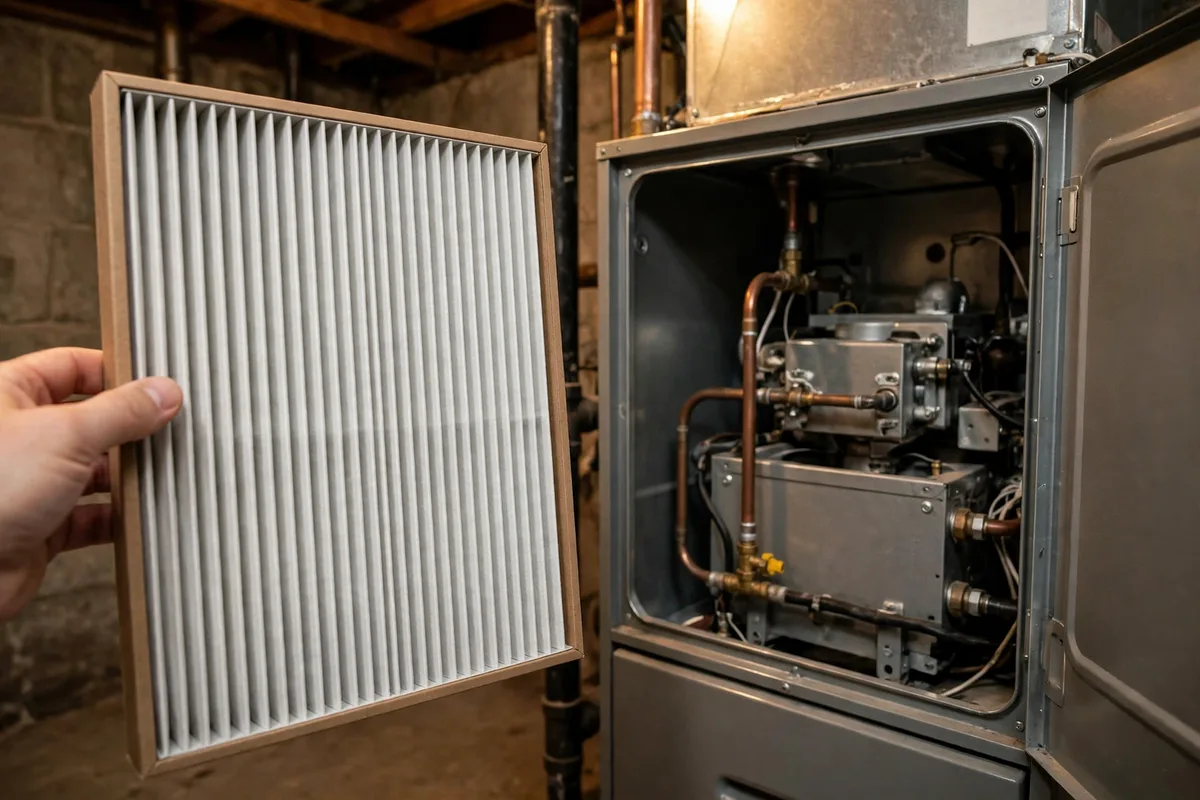
Casper homes often heat through basements and crawl spaces, and a filter choked with dust makes every other problem worse. A quick filter check costs little time and rules out the simplest cause of short cycling and weak airflow before a visit is booked.
Before you call
A few details from the house help us arrive with the right checks in mind. Have these ready when you ring, and run the two simple checks first.
Name the cold rooms and whether they sit at the end of a duct run, over a garage, or on the river side of the house. The room pattern often matters more than the furnace model.
Say whether it stopped outright, blows cold air, cycles in short bursts, or made a new noise. Each pattern sends the visit down a different path.
Tell us if the home is a mid-century house near the river, an east-side build, or a home in Mills, Evansville, or Bar Nunn, and whether the ducts run through a crawl space.
A clogged filter is the most common simple cause of weak heat and short cycling. Swap it if it looks loaded with dust and see if the pattern changes.
Sidewall pipes on newer furnaces drift shut in a Casper snow. A gentle clear of snow from the pipes can restore heat without a visit.
Make sure the thermostat is set to heat and warmer than the room, and that it reads the living space rather than a sunny wall or a cold hallway.
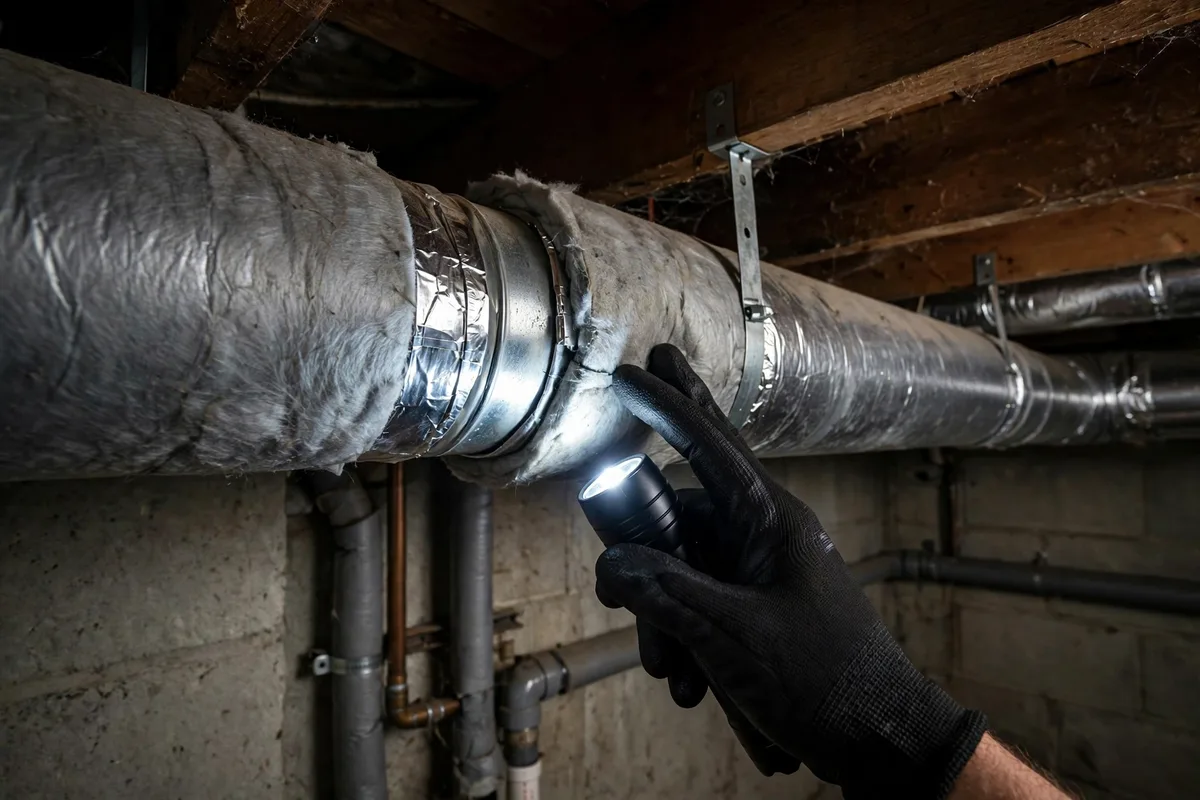
In Casper the furnace is often fine while the delivery system is not. Ducts through a cold crawl space leak heat on every cycle, so a visit here looks under the house as well as inside the furnace cabinet, and sealing a run can warm a far bedroom more than a part swap.
Casper seasons
Casper cold arrives in two waves, the first deep cold of late fall and the long January stretch. These checks, done before the valley cold settles, move most breakdowns to a planned afternoon.
A fall visit checks the igniter, flame sensor, and blower while repairs are still unhurried, before the first deep cold exposes a weak part.
Check the filter monthly through winter. Long run hours load it faster here, and a loaded filter starves the blower.
Find the intake and exhaust pipes before snow season, and note where drifts pile against that side of the house.
Ask about crawl-space ducts at the fall visit. A disconnected or crushed run explains a cold far room better than any thermostat setting.
If someone in the house sleeps days, set bedrooms warm for morning hours rather than a standard daytime program, since Casper shift households need heat at odd hours.
Press the test button on each alarm before heating season, and treat soot, a wavering flame, or a strange smell as a reason for a prompt safety check.
Local answers
Long duct runs and crawl-space ducts are the usual cause in Casper, because heat leaks out of the duct before it reaches the far rooms. A room over a garage or at the end of a run suffers most. We inspect the duct path, check for disconnected or crushed runs, and test airflow at each register, since the furnace may be fine while the delivery system is not.
Snow or ice may have blocked the intake or exhaust pipe, which trips a safety switch and locks the furnace out. Newer high-efficiency furnaces vent through sidewall pipes that drift shut easily. Clear snow gently from the pipes and see if the unit restarts, but call us if it locks out again, since repeated lockouts point to venting or pressure-switch trouble.
River-valley homes sit in colder pooled air on still nights, so their furnaces run longer than homes on higher ground. That extra run time wears igniters and blowers sooner. A well-sealed duct system and a fall tune-up matter more in the valley, because the furnace has less margin on the coldest nights.
Short cycling means the furnace starts and stops in quick bursts instead of running a steady cycle. It can come from a clogged filter, a blocked return, an oversized furnace, or a limit switch tripping on overheating. Short cycling wastes energy and wears parts fast, so a furnace doing it through a Casper winter should be checked before the pattern breaks something bigger.
Every gas furnace home should have working carbon monoxide alarms near sleeping areas, and a furnace with soot, a yellow or wavering flame, or a strange smell needs a prompt safety check. Casper valley inversions can affect chimney draft, which is one more reason a yearly safety inspection and alarm check belong on the fall list.
Early fall is best for tune-ups and planned replacements, because parts and scheduling are easiest before the cold arrives. Emergency work happens all winter, but a fall visit that replaces a weak igniter or a tired capacitor can prevent the coldest-night call that nobody wants to make.
Tell us the symptom, the age of the house if you know it, and which rooms are cold. We will help you sort a quick check from a visit.
Call (307) 309-8601 Contact Frontier Heating