Furnace Installation
A new furnace fitted to the home, its ducts, and its fuel supply.
Old out, new in
Every furnace reaches a point where another repair buys less and less heat. Replacement is the visit that swaps the old unit for a new one fitted to the house as it stands today, not as it stood when the old furnace went in. This page explains how we judge that point, what the swap involves, and how the new unit is tested.
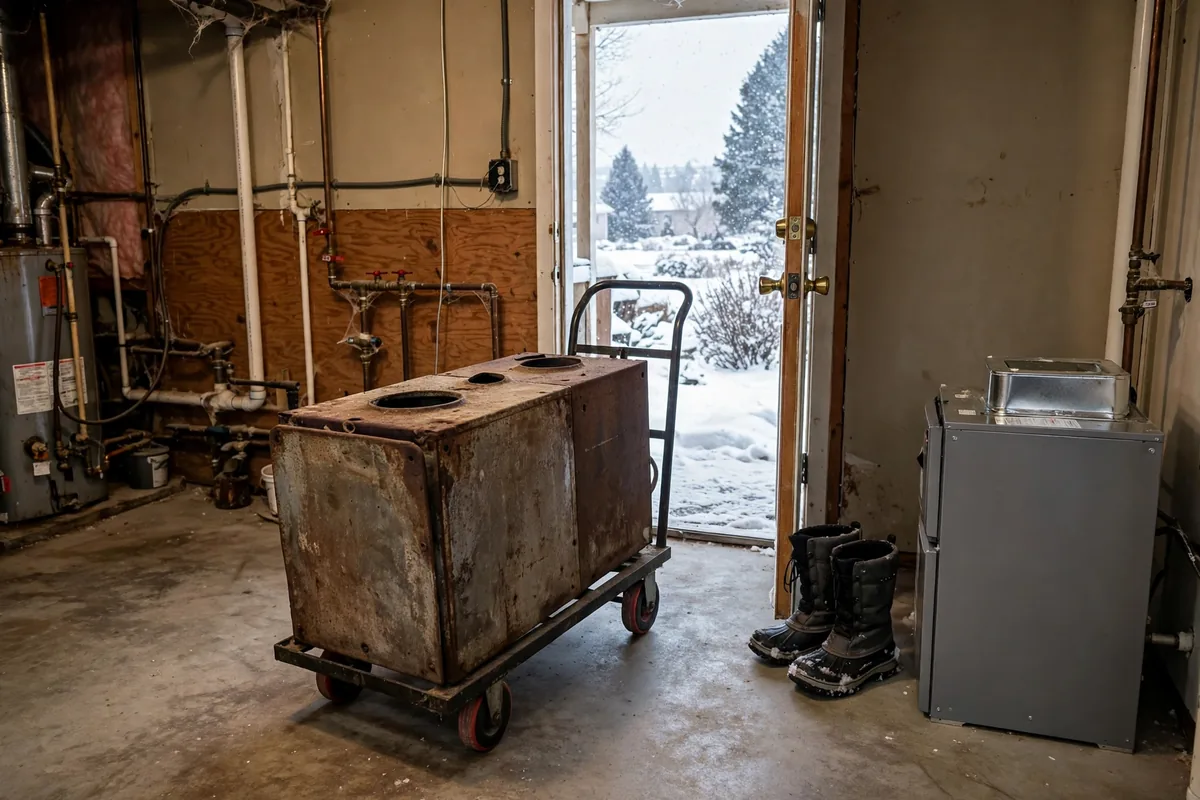
The call
The clearest sign is repetition: the same major part failing twice, or a different major part each winter. A furnace that needs attention every heating season is telling you its core parts are wearing together, and fixing one leaves the next in line. Rising fuel use without a change in habits points the same way, since a worn furnace burns more to deliver the same heat.
Age alone does not decide it. A well-kept older unit that heats evenly and fails rarely is still a good furnace. The decision comes from the pattern: frequency of breakdowns, the size of each repair, and whether rooms still heat evenly after the work. When those three all point the wrong way, replacement saves more winters than it costs.
The swap
We start by shutting down fuel and power, then disconnect the old unit and lift it out. The space it leaves gets a careful look: the pad, the duct openings, the vent route, and the wiring. Wyoming homes often hide a surprise here, such as a vent that was adapted years ago or a return opening that never matched the furnace. Those get corrected before the new unit goes in.
The new furnace is set, leveled, and connected to fuel, venting, power, and controls. Duct joints are sealed, the condensate route is set where needed, and the thermostat is tested against the new controls. We run the unit through a full cycle and walk the house checking vents, so the first night with the new furnace is a normal night, not a test run.
Repairs stacking up each winter? Call Frontier Heating to talk about replacement.
Call (307) 309-8601Choosing well
A replacement is not a copy of the old label. Houses change: insulation gets added, rooms get remodeled, and duct runs get altered, so the right size today may differ from the size fitted decades ago. We measure the home and check the ducts before recommending a unit, and we talk through fuel options where the house can use more than one.
Our furnace installation page describes the fitting in full, and our gas furnace services page covers gas units in detail. The replacement we recommend is the one that heats the whole house evenly, not the largest unit that fits the doorway. Oversized units short-cycle and leave cold corners, which is the opposite of what a replacement should fix.
Afterwards
The first change most people notice is evenness. Rooms that always lagged catch up, and the furnace runs in longer, calmer cycles instead of short bursts. Noise usually drops too, since new blowers and sealed ducts hum rather than rattle. Fuel use often settles lower as well, though we never promise a figure, since habits, weather, and insulation all shape it.
Keeping those gains takes little effort: filters on schedule, vents unblocked, and a yearly maintenance and tune-up visit to keep burners clean and sensors honest. The ENERGY STAR program publishes guidance on heating equipment for homes, and its product pages are worth a look when comparing units. See ENERGY STAR products for that background.
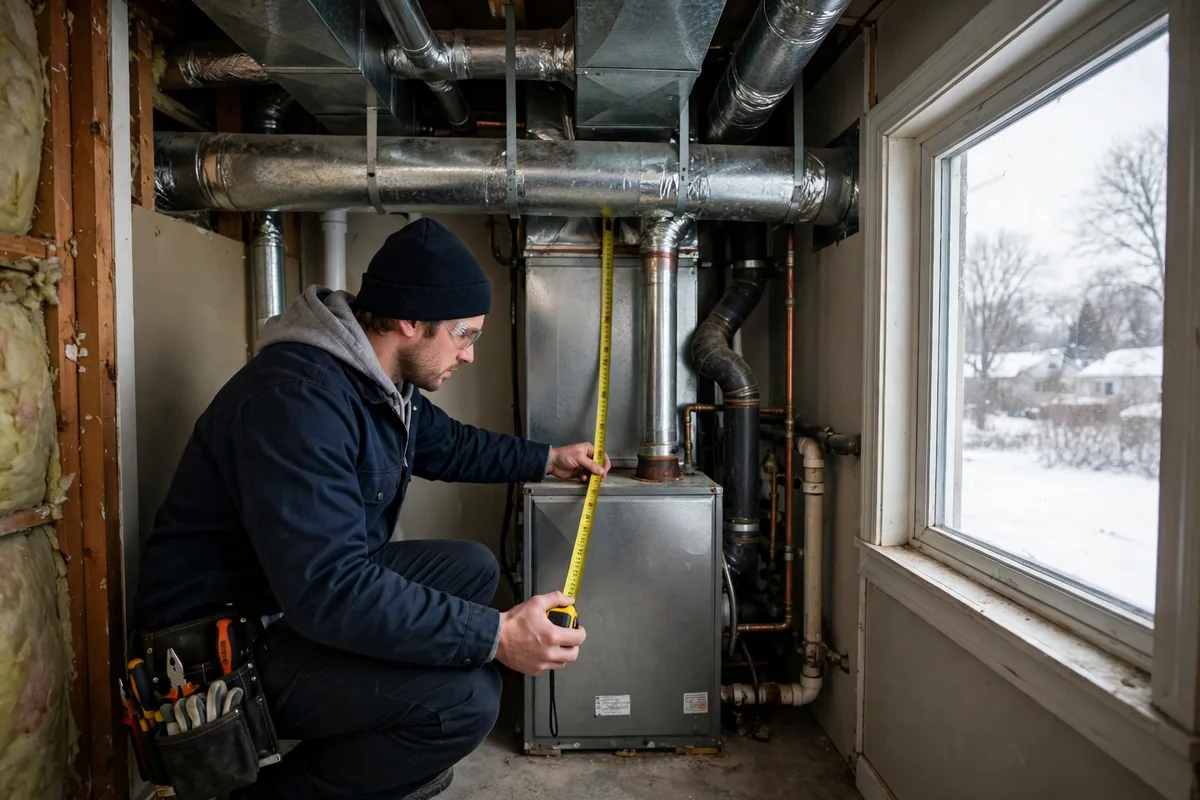
A furnace that fails every year may be telling you something. Call us for an honest look.
Call (307) 309-8601Timing
A planned replacement in mild weather is calmer than a swap during a cold snap. There is time to measure properly, sort vent or duct changes, and test without a cold house waiting. If the old furnace fails outright, the swap still happens, but the timetable is set by the weather, not by you.
If your furnace has needed major work two winters running, autumn is the time to talk about it, before the next heating season starts. A short conversation and a look at the unit is enough to judge whether another winter of repairs is sensible or whether replacement is the kinder option for the house and the household budget in effort, if not in dollars, which we never quote here.
The swap
A replacement follows the same order every time: shut down, lift out, inspect what is left, then fit and test the new unit.
The old unit is made safe before anything is disconnected.
Fuel, venting, power, and controls are separated and the old furnace comes out.
The pad, duct openings, vent route, and wiring get a careful look, and surprises such as an adapted vent or a mismatched return opening are corrected.
The new furnace is set in place and connected to fuel, venting, power, and controls.
Duct joints are sealed and the condensate route is set where the new unit needs one.
The thermostat is tested against the new controls, the unit runs through a full cycle, and the house is walked vent by vent.
Up close
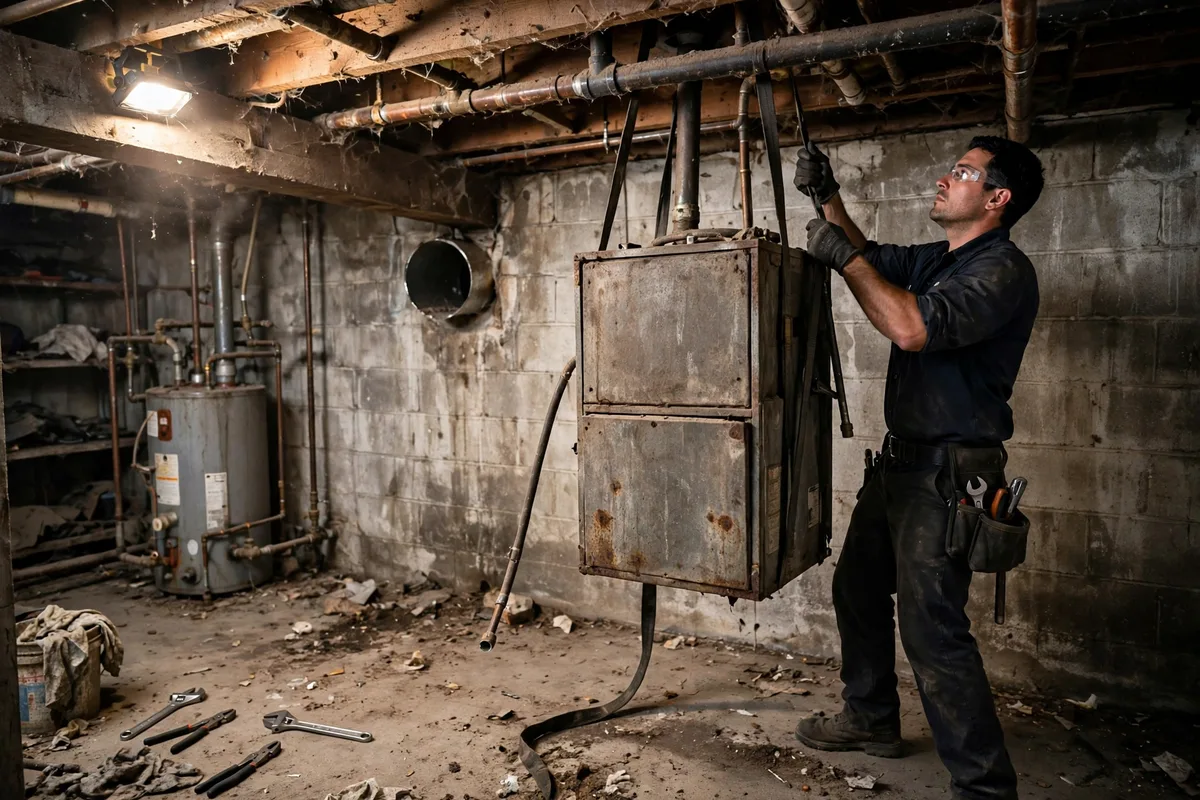
A replacement starts with removal, not with the new unit. The space the old furnace leaves often hides the surprises: an adapted vent, a return opening that never matched, wiring that needs tidying.
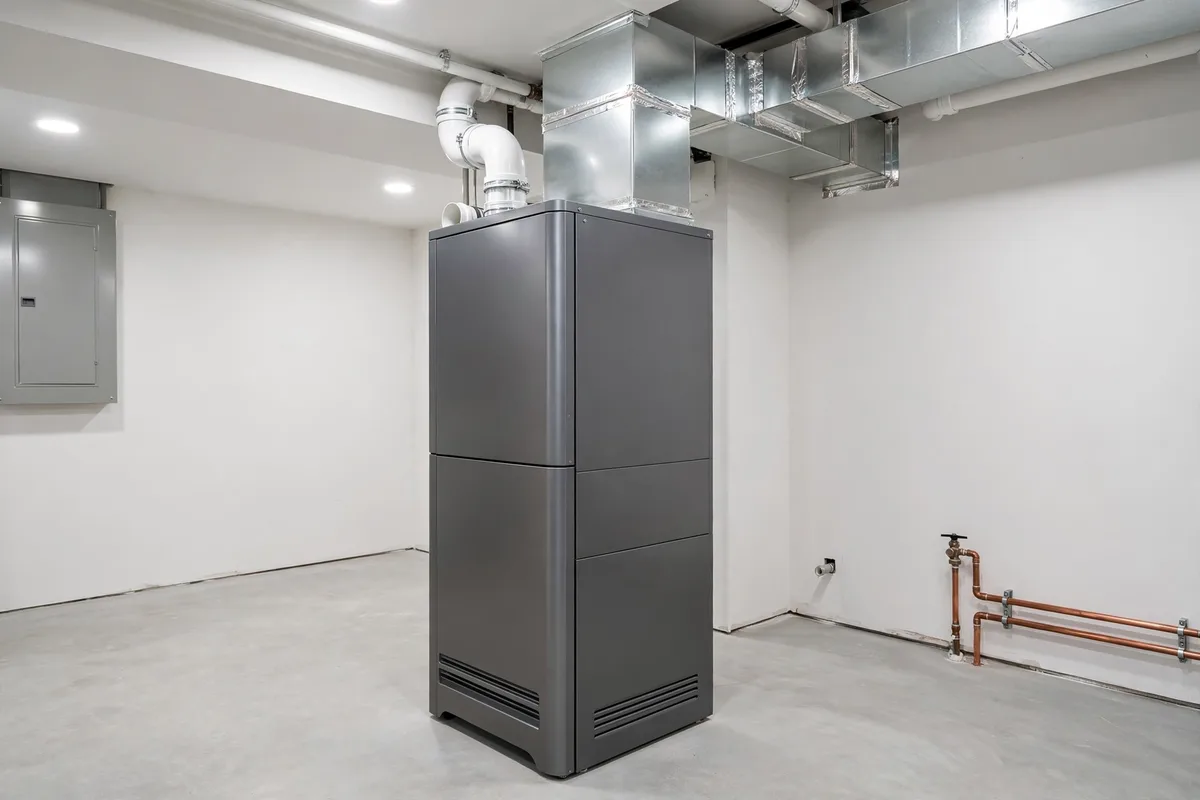
The new furnace is fitted to the house as it stands today, not as it stood when the old one went in. That is why measuring comes before choosing, and testing comes before leaving.
Reading the signs
Replacement is judged by pattern, not by one breakdown. Each of these signs points the same way when it keeps repeating.
| Symptom | What it usually means | What to do |
|---|---|---|
| The same major part fails twice | The core parts are wearing together, and fixing one leaves the next in line. | Talk through replacement alongside repair, with both paths laid out plainly. |
| A different major part fails each winter | The furnace needs attention every heating season, which is the pattern that points toward replacement. | Weigh the run of repairs against a new unit fitted to the house today. |
| Fuel use rises without a change in habits | A worn furnace burns more to deliver the same heat. | Ask whether the unit still heats evenly after repair, or whether the pattern points the other way. |
| Rooms stay cold after repair | The unit no longer delivers even heat, even when the failed part is fixed. | Consider replacement when uneven rooms join repeated breakdowns and rising fuel use. |
Weighing it up
The same situation can point either way. What decides it is the pattern across breakdowns, repair size, and evenness of heat.
| Situation | Repair fits when | Replacement fits when |
|---|---|---|
| A single failed part | The unit otherwise runs well, heats evenly, and fails rarely. | The same part has already failed before, or failures keep coming each winter. |
| Repeated major repairs | Each repair is small and the unit recovers fully between them. | A different major part fails each season and the core parts are wearing together. |
| Rising fuel use | Use rises for a clear outside reason, such as a colder winter or a change in habits. | Use rises with no change in habits while the furnace works harder for the same heat. |
| Uneven rooms | One room lags for a duct reason that can be put right on its own. | Rooms stay cold after repair, alongside repeated breakdowns. |
Look at the pattern, not one breakdown. Repeated major repairs, rising fuel use, and rooms that stay cold after repair all point toward replacement. A single failed part on a unit that otherwise runs well points toward repair. A technician can lay out both paths after seeing the unit.
Usually, yes, with adjustments. New units differ in size and venting from old ones, so the pad, duct openings, and vent route may need adapting. We measure the space and the ducts before recommending a unit, so fitting problems are found early, not on the day.
Yes. Winter replacements happen whenever an old unit fails beyond sensible repair. The work takes longer in cold weather, since the house must be kept safe while the swap happens, but it is done routinely. A planned autumn swap is calmer, but winter is no barrier.
Not necessarily. Sound ducts that match the new unit stay in place. Ducts that leak badly or cannot carry the airflow the new furnace needs are fixed as part of the job. We inspect the ducts before recommending a unit, so any duct work is planned, not improvised.
For most straightforward swaps, the gap lasts part of a day, while the old unit comes out and the new one goes in and gets tested. We plan the work so the house is not left open to cold overnight, and we talk through the timing before the day starts.
It is worth checking. A thermostat that reads wrong or cannot use the new furnace's features holds the new unit back. If the existing control reads accurately and works well with the new furnace, it can stay. We test it during the visit and advise from what we find.
We take it away as part of the visit unless you ask us to leave it. The furnace room is left tidy, and openings left by the old unit are sealed or adapted for the new one. Nothing from the old installation is left to interfere with the new unit.
Often, when the cause was the wrong size unit or poor duct capacity. Sizing the new furnace to the house and checking airflow are part of a proper replacement. If a room still lags after that, the cause is usually a duct problem, and we chase it rather than calling the job done.
No. An oversized furnace heats in short bursts, leaves cold corners, and wears out faster from constant starting and stopping. The right furnace matches the home's heat loss and the ducts it must feed. Bigger is only better when the house genuinely needs more heat.
Tell us how often the old unit has needed work and which rooms stay cold. We will look at the furnace, the ducts, and the house, then lay out repair and replacement side by side so you can choose with a clear head.
Call (307) 309-8601