Capacitor
Gives the motor its starting push. A weak capacitor leaves the motor humming without turning, or needing a nudge to start.
Air moving again
The blower motor is the part that moves warm air from the furnace to every room. When it weakens, the furnace may burn fine while the house still cools, because the heat never leaves the furnace room. This page explains how blower motors fail, how we test them, and when repair beats replacement of the motor itself.
Symptoms
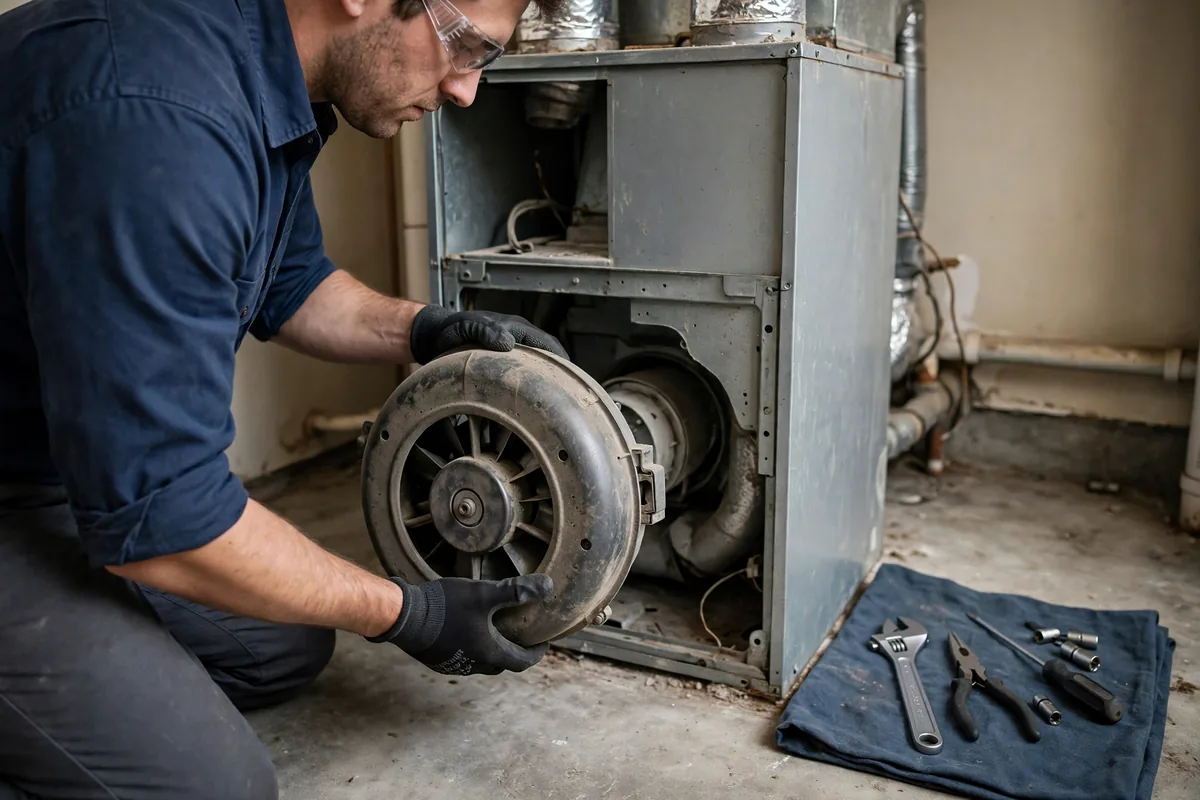
A failing blower announces itself in stages. First the air from vents feels weaker, especially in far rooms. Then a hum, squeal, or grinding joins the normal sound, or the blower hesitates before starting. Finally it may not start at all, and the furnace shuts down on its overheating limit switch because heat has nowhere to go.
Dust makes every stage worse. A blower wheel caked in dust moves less air for the same effort, which overheats the motor and strains its bearings. A dirty filter adds the same strain from the other side, by starving the blower of return air. When we find a failed motor, we also look at the wheel, the filter, and the ducts, since fixing the motor without fixing its load invites a repeat failure.
Testing
Diagnosis starts with the capacitor, the small cylinder that gives the motor its starting push. A weak capacitor is the most common blower fault, and it shows up as a motor that hums without turning or needs a nudge to start. A meter test proves it in a minute, and swapping it is a small job compared with changing the motor.
Bearings come next. A motor that squeals, grinds, or wobbles has bearing wear, and a motor that reads open on its windings has burned out inside. Belt-driven blowers add one more check: a cracked or slack belt that slips instead of turning the wheel. Each finding leads to a different repair, and we explain which one applies before any work starts.
Blower humming or air gone weak? Call Frontier Heating before the motor stalls.
Call (307) 309-8601The repair
The furnace is shut down and opened, the blower assembly is slid out, and the failed part is identified on the bench: capacitor, belt, bearings, or motor. A capacitor or belt swap is quick. A motor swap takes longer, since the new motor must match the old one in size, speed, and mounting, and the wheel must be balanced on its shaft.
After fitting, we run the furnace through a full cycle and check airflow at several vents, listening for vibration and watching for steady running. Our ductwork and airflow services page covers the duct side, since a new motor cannot fix crushed or blocked ducts. The visit ends with the furnace heating evenly, not just running loudly in the furnace room.
Prevention
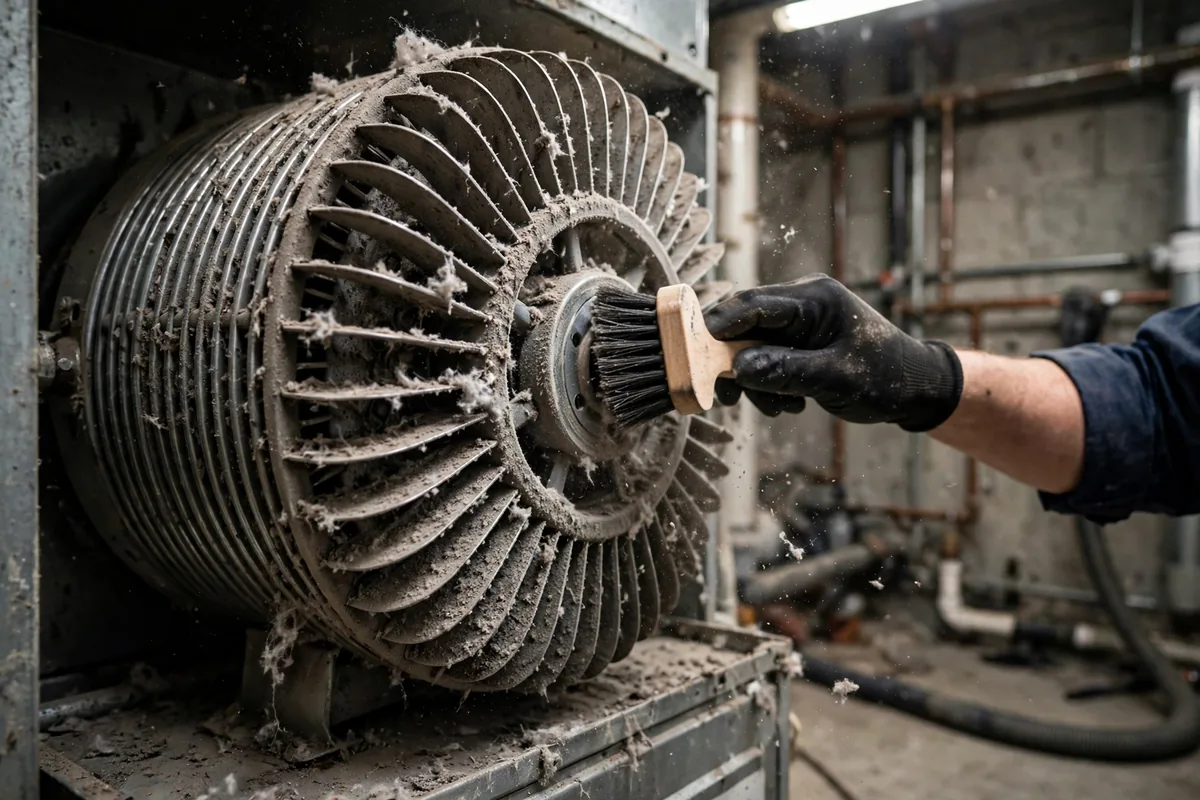
A clean filter is the best protection a blower motor has. It keeps dust off the wheel, keeps return air flowing, and keeps the motor from overheating. Check it monthly in winter. A yearly maintenance and tune-up visit cleans the wheel and checks the capacitor before it weakens enough to stall the motor. The U.S. Department of Energy covers heating upkeep in its energy saver material. See energy.gov energy saver guidance for that background.
Listen to the blower now and then. A new hum or squeal is an early warning, and calling at that stage usually means a capacitor or belt, not a motor. Waiting until the motor stops turns a small part into a bigger job and leaves the house cold while the work happens.
A new squeal from the furnace room is an early warning. Call us.
Call (307) 309-8601Motor or furnace
A motor swap is enough when the furnace itself is sound: the burner or elements heat well, the heat exchanger is intact, and the only fault is air movement. Most blower failures fit that picture, and the furnace returns to normal heat once air moves again.
It is not enough when the furnace has several worn parts at once, or when the same motor has failed twice because the ducts overload it. In that case we talk about the wider picture, including our furnace replacement page, rather than fitting a third motor into a system that will kill it. Honesty here saves a repeat visit.
Inside the blower
A blower fails piece by piece, and each piece has its own test. These are the parts behind most blower trouble, in plain words.
Gives the motor its starting push. A weak capacitor leaves the motor humming without turning, or needing a nudge to start.
Carry the motor shaft as it spins. Worn bearings squeal, grind, or let the motor wobble.
The coils inside the motor. A motor that reads open on its windings has burned out inside.
On belt-driven blowers, the belt turns the wheel. A cracked or slack belt slips instead of turning it.
Moves the air itself. A wheel caked in dust moves far less air for the same effort and strains the motor.
The unit that drives the wheel. When bearings and windings both point the same way, the motor, not a small part, is the repair.
Up close
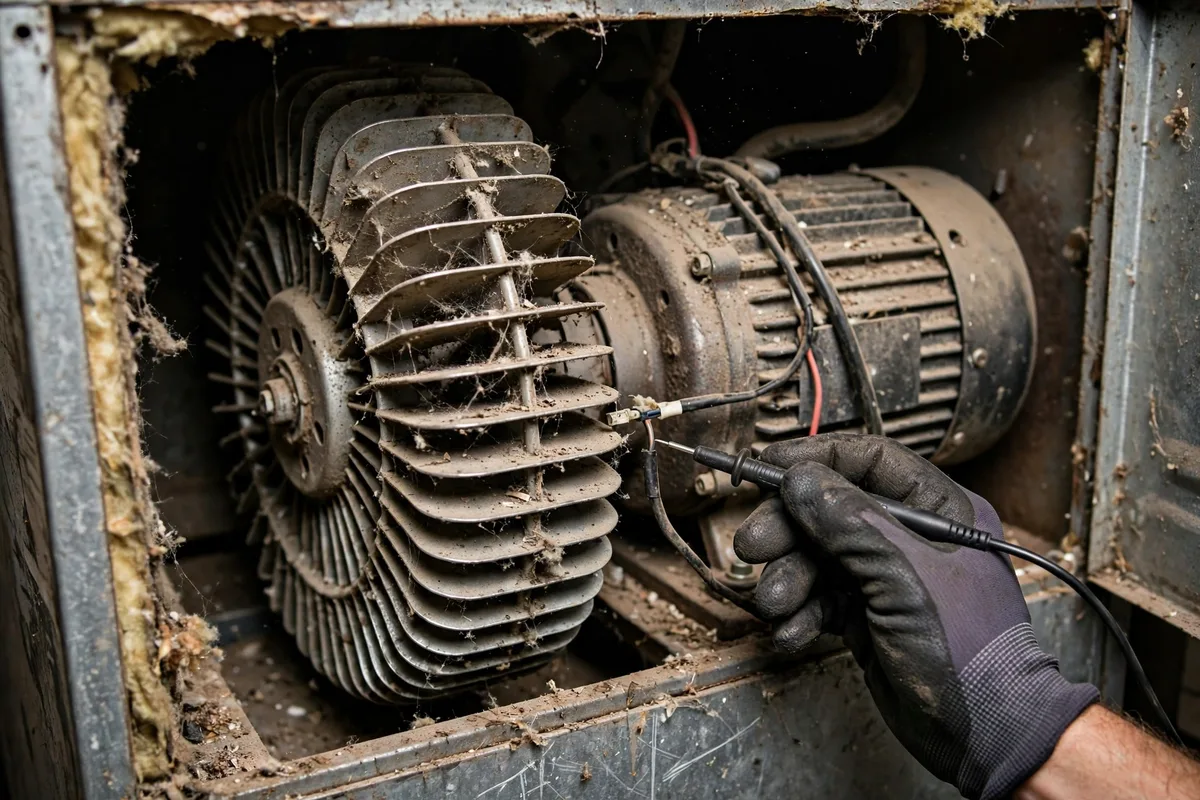
Diagnosis starts with the small parts and works outward: capacitor first, then bearings and windings, then the belt on belt-driven blowers. A meter test proves each finding before any work starts.
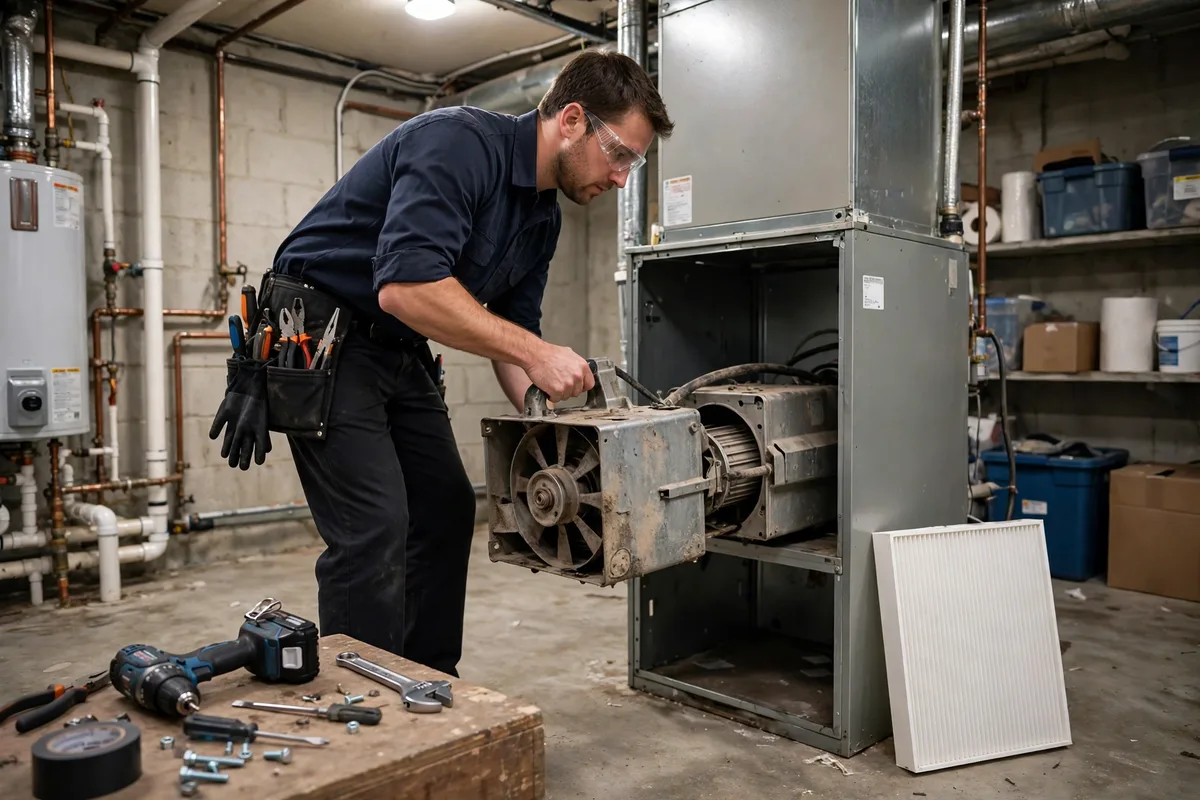
Fixing the motor without fixing its load invites a repeat failure. A dirty wheel or a starved filter strains the new part exactly as it strained the old one, so both are put right together.
The visit
A blower visit follows the air: from the motor outward to the wheel, the filter, and the ducts that carry the air to the rooms.
The furnace is shut down and opened so the blower can be reached safely.
The blower assembly is slid out, and the failed part is identified on the bench rather than guessed at.
A meter test proves a weak capacitor in a minute, and swapping it is a small job compared with changing the motor.
Squeal or wobble points at bearings, an open reading points at windings, and a cracked or slack belt points at the drive.
Each finding leads to a different repair, and we explain which one applies before any work starts.
The wheel is checked, the filter is checked, and the ducts are looked at, so the repaired motor does not inherit the old strain.
Reading the symptoms
A failing blower announces itself in stages: weaker air first, then noise, then no air at all. Each stage points at a different piece.
| Symptom | What it usually means | What to do |
|---|---|---|
| Air from vents feels weaker, especially in far rooms | A blower wheel caked in dust, a dirty filter starving return air, or a motor beginning to weaken. | Check the filter and note which rooms lag, then have the wheel and motor tested. |
| Hum without spinning, or a nudge needed to start | A weak capacitor, the most common blower fault, though a seized bearing can cause the same hum. | A meter test tells the two apart, and a capacitor swap is a small repair. |
| Squeal, grind, or wobble | Bearing wear, or a cracked or slack belt on a belt-driven blower. | Bearings and belt are checked in turn, since each leads to a different repair. |
| No air at all, furnace shuts down | Heat with nowhere to go trips the overheating limit switch, which shuts the unit down for safety. | Restoring airflow is the fix, not resetting the limit switch repeatedly. |
The usual cause is a weak capacitor, the part that gives the motor its starting push. Without enough push, the motor hums and sits still. A meter test confirms it, and a capacitor swap is a small repair. A seized bearing can cause the same hum, and testing tells the two apart.
Yes. When air stops moving, heat builds up inside the furnace and trips the limit switch, which shuts the unit down for safety. The furnace may restart, overheat again, and shut down again in a cycle. Restoring airflow is the fix, not resetting the limit switch repeatedly.
Weak airflow from vents, dust visible on the wheel, and a motor that strains or runs hot all point at a dirty wheel. A caked wheel moves far less air than a clean one. Cleaning is part of a maintenance visit, and it is checked whenever a motor fault is diagnosed.
It depends on the noise and the weather. A squeal or grind means wear, and in deep cold it deserves a prompt call, since a stalled blower leaves the house without heat. If the furnace still heats and the noise is new, call soon rather than waiting for the motor to stop.
A capacitor is a small cylinder that stores a charge and releases it to start the motor turning. It weakens with age and heat, and a weak one leaves the motor humming without spinning. Testing it takes a minute with a meter, and replacing it is one of the simplest blower repairs.
No. Motors differ in size, speed, mounting, and power, and the replacement must match the furnace and its duct system. Fitting the wrong motor causes weak airflow or overheating, so the old motor is matched carefully before a new one goes in.
Over time, yes. A clogged filter starves the blower of air, which makes the motor work harder and run hotter. Bearings and windings wear faster under that strain. Monthly filter checks in winter are the simplest way to protect the motor.
Distance, duct size, and duct condition all shape airflow, and a weak blower makes the gap worse. Once the blower is healthy, remaining unevenness usually comes from the ducts themselves, which is why airflow problems are checked as a system, not as one part.
Yes. The wheel must sit true on the new motor shaft, or vibration and noise follow, and bearings wear fast. Balancing and a test run are part of a proper motor swap, not extras. Vibration after a swap is a sign the wheel needs attention, not something to live with.
Tell us whether the blower hums, squeals, or has stopped, and whether far rooms went cold first. We test the capacitor, bearings, and windings before changing any part.
Call (307) 309-8601