Burner and flame sensor cleaned
Soot and dust are cleared so the sensor reads the flame true and the burner lights cleanly.
Ready for winter
A tune-up is a careful once-over before the heating season asks the most of your furnace. We clean what fouls, test what wears, and adjust what has drifted, so the unit faces Wyoming winter in the best shape it can be in. This page explains what the visit covers, what it finds, and why autumn is the time to book it.
The visit
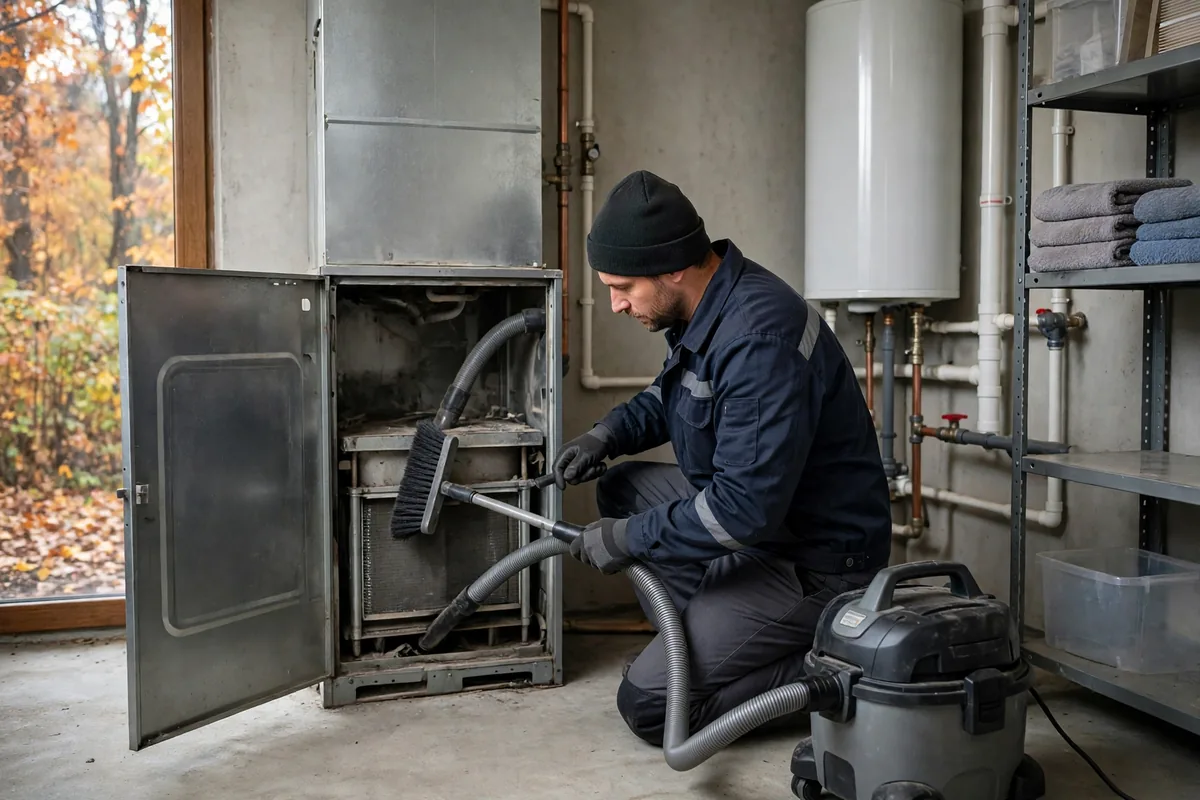
We start with the burner and flame sensor, where soot and dust quietly build up. A dirty sensor misreads the flame and shuts the furnace down for no good reason, which is one of the most common cold-night faults. Burners get cleaned, the flame gets watched for a steady pattern, and the ignition system gets tested through several cycles.
Then we move to airflow and safety. The blower wheel and motor get checked, the filter gets inspected, and the heat exchanger gets a close look for cracks or heavy soot. Safety switches are tested, the vent is checked for blockage, and the thermostat is compared against a thermometer. Each check is small on its own, and together they show whether the furnace is ready for months of steady running.
What it finds
Weak ignitors are the classic find. They still light the burner, but slowly or only on the second try, and they fail outright when cold weather forces long cycles. Cracked belts, tired capacitors, and loose wiring show up the same way: working today, gone tomorrow. Catching them in autumn turns a planned part swap into a routine visit instead of a midnight call.
A tune-up also finds the slow problems that do not stop the furnace but wear it down. A clogged filter that overheats the heat exchanger, a blower wheel caked in dust, or a vent partly blocked by debris all shorten the life of the unit. Our furnace safety inspection goes deeper on the safety side, while a tune-up covers the running health of the whole system.
Autumn is the time to book a tune-up. Call Frontier Heating before the cold sets in.
Call (307) 309-8601Your part
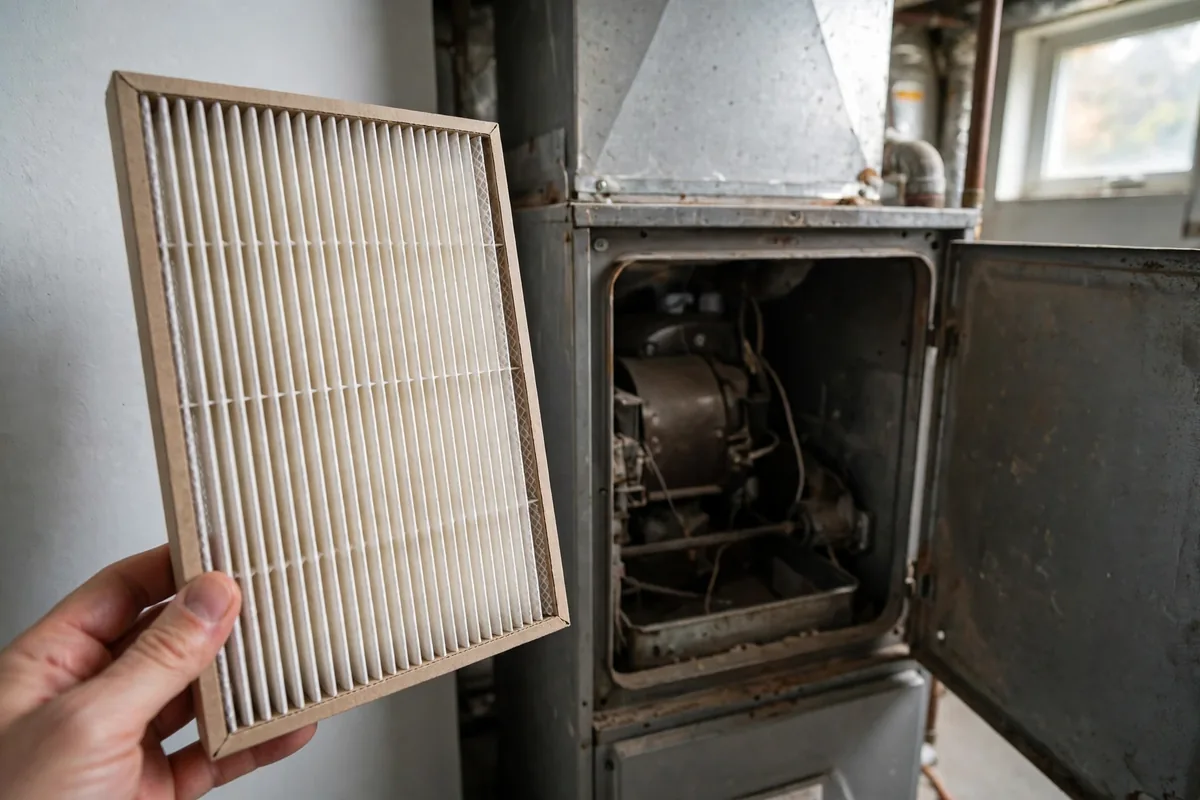
Filters are yours. Check the filter monthly through winter, and change it when it looks grey and clogged. A clean filter protects the blower, the heat exchanger, and the air your family breathes, and it costs little effort. Keep a spare filter near the furnace so a dirty one never waits a week for a shop trip.
Clearance is the second job. Keep the furnace room clear of stored boxes, paint cans, and laundry piles around the unit. The furnace needs air, and a technician needs room to open every panel. A blocked return vent in a bedroom or hallway starves the system just as surely as a dirty filter, so keep vents open and uncovered.
Timing
Autumn gives time. If the visit finds a worn ignitor or a tired motor, the part can be fitted on a mild day, not during a cold snap when every home in the county wants help at once. The furnace then enters winter tested, cleaned, and adjusted, instead of entering it with a fault waiting for the first long cold stretch.
Homes that skip tune-ups for years still benefit from one now, and our blower motor repair page explains what happens when that part is left to struggle. The U.S. Department of Energy notes that maintained heating equipment runs as designed, and its energy saver pages outline the upkeep a furnace needs. See energy.gov energy saver guidance for that outline.
A furnace that missed last year's tune-up deserves one this year. Call us.
Call (307) 309-8601Honest scope
A tune-up will not revive a cracked heat exchanger, a burned-out motor, or a furnace whose core parts are all wearing out together. Those need repair or replacement, and we say so when we find them rather than dressing up a tune-up as a cure. What a tune-up does is keep a sound furnace sound, and catch small faults before they become big ones.
It also will not fix duct problems on its own. Leaky or undersized ducts need their own attention, covered on our ductwork and airflow services page. A tune-up is the yearly habit that protects the furnace itself, and it pairs well with duct work when rooms heat unevenly.
Before the visit
A tune-up is a planned once-over, and a few notes from the homeowner help the visit focus on what matters most.
Up close
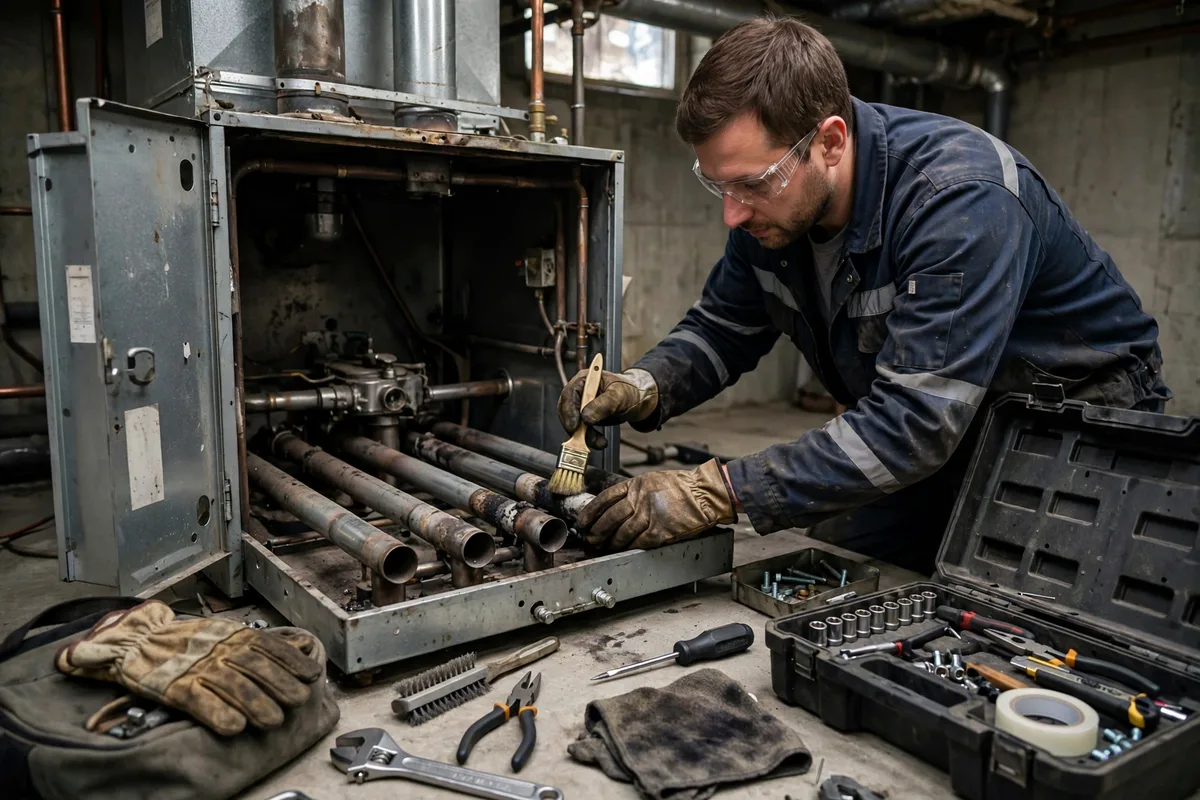
A tune-up starts where soot and dust quietly build up: the burner and the flame sensor. Cleaning them now keeps a dirty sensor from misreading the flame and shutting the furnace down for no good reason.
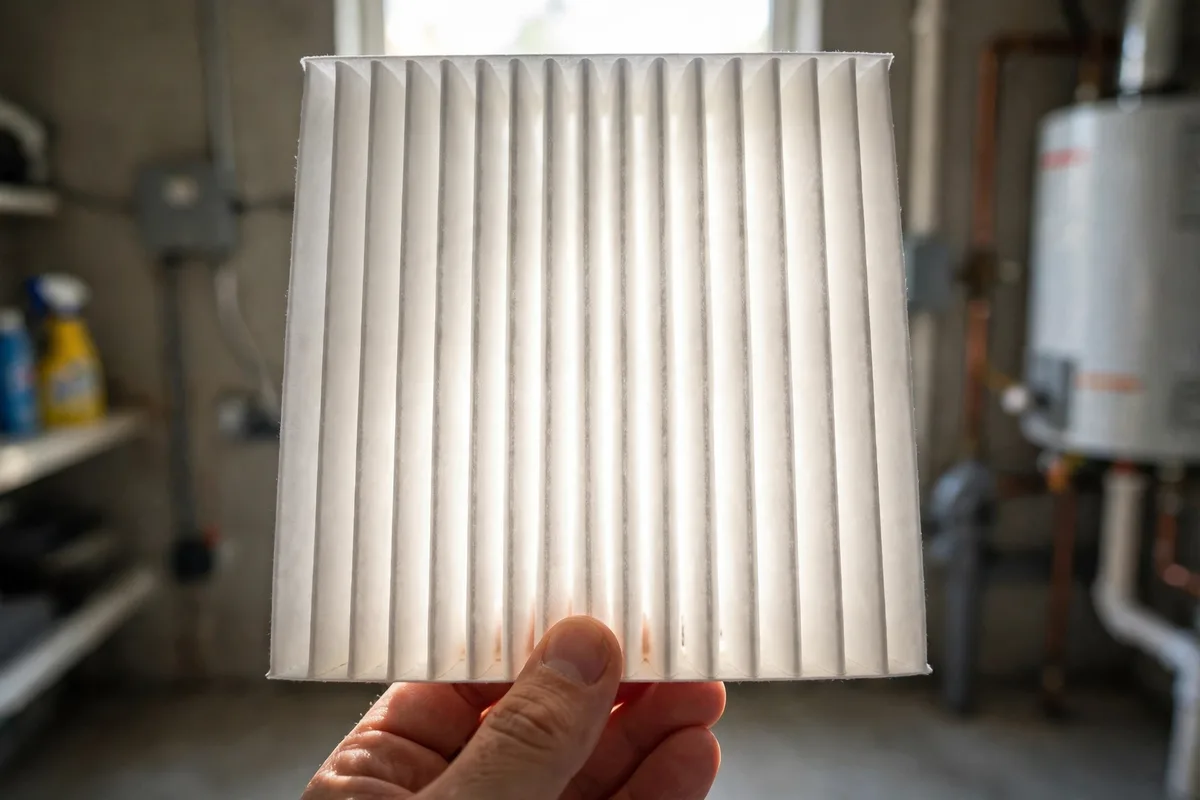
The filter gets inspected on every tune-up, because a clogged filter starves the blower, overheats the heat exchanger, and trips safety switches that shut the whole unit down.
Autumn checklist
These checks, done while the weather is still mild, move most breakdowns from a cold night to a planned afternoon.
Soot and dust are cleared so the sensor reads the flame true and the burner lights cleanly.
The ignition system is watched across repeated cycles, since a weak ignitor often still lights, but slowly or only on the second try.
Airflow parts are inspected together, because a caked wheel or a clogged filter strains the motor and the heat exchanger alike.
The exchanger gets a close look for cracks or heavy soot before months of steady running.
Switches are tested and the vent is checked for blockage, so the furnace shuts down when it should and runs when it should.
The thermostat is compared with a thermometer reading, so the call for heat matches the rooms as they actually feel.
The visit
A tune-up moves through the furnace in order: flame first, then airflow and safety, then the controls that tie them together.
Soot and dust are cleaned away, the flame is watched for a steady pattern, and the sensor is checked for a true reading.
The ignition system is tested through repeated cycles to catch a weak ignitor before cold weather forces long runs.
The blower wheel and motor are checked, the filter is inspected, and the heat exchanger is looked over for cracks or heavy soot.
Safety switches are tested and the vent is checked for blockage.
The thermostat is compared against a thermometer so its reading matches the living space.
Each check is small on its own, and together they show whether the furnace is ready for months of steady running.
Once a year, before the heating season, is the standard rhythm. A furnace that runs hard through a Wyoming winter benefits from that yearly check, since ignitors, sensors, and motors wear with use. Homes with pets, heavy dust, or older units gain the most from keeping the habit.
A tune-up is planned upkeep on a working furnace: cleaning, testing, and adjusting before trouble starts. A repair fixes something that has already failed. A tune-up often finds the part that would have become a repair, which is why it saves cold-night calls.
Homeowners can change filters and keep vents clear, and those two jobs matter. Burner cleaning, heat exchanger inspection, gas valve testing, and safety switch checks belong to a technician, since they involve fuel, flame, and venting. The safe split is simple: filters and clearance are yours, the inside of the furnace is ours.
Yes. Burners, the flame sensor, and the blower area are cleaned as part of the visit, and the filter is inspected. Heavy dust on the blower wheel or a fouled sensor is cleaned on the spot. Duct cleaning is a separate job and is not part of a standard tune-up.
It lowers the odds a great deal, but no visit can promise a winter without a breakdown. Weak ignitors, tired capacitors, and dirty sensors are the faults a tune-up catches most often, and those cause many cold-night failures. A furnace with a cracked core part needs repair, not just a tune-up.
Most take well under two hours, depending on the furnace and what the checks find. A clean, well-kept unit is quicker, while a unit that has missed several years takes longer. We work through the full checklist either way, rather than cutting it short.
Yes, and we check that alarms near the furnace room are present and working. An alarm with a dead battery or past its working life is flagged on the spot. Alarms are a household safety net, and a tune-up is a good moment to confirm they are live.
Yes, once it has run a heating season. New furnaces still collect dust, and sensors still foul. A yearly visit also keeps a record of the unit's condition from its early years, which helps later when a fault does appear. New does not mean it never needs attention.
We explain it in plain words, show you what we found where it can be shown safely, and lay out the options. Small worn parts can often be fitted during the same visit. Larger faults get a clear explanation and a plan, never a rushed decision on the spot.
A yearly once-over catches weak ignitors, dirty sensors, and tired motors while they are still small jobs. Call us in autumn and let your furnace face winter cleaned, tested, and adjusted.
Call (307) 309-8601