1. Thermostat calls for heat
The thermostat signals that the rooms have fallen below the setting, and the furnace sequence begins.
Gas heat, done safely
Gas furnaces heat most Wyoming homes, and they reward careful attention. Burners, gas valves, flame sensors, and vents all work together, and a fault in one shows up as short cycles, cold rooms, or a furnace that will not stay lit. This page explains how gas furnaces fail, how we diagnose them, and how we keep them running safely.
How they fail
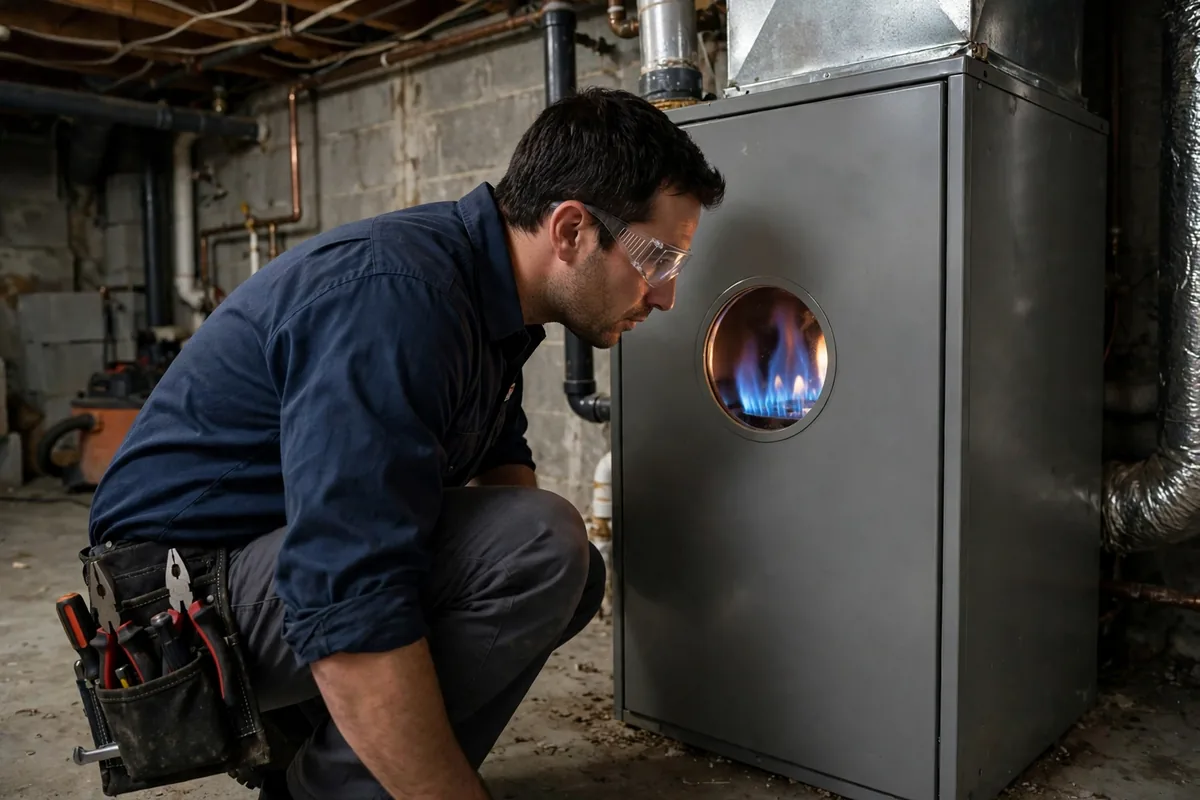
A dirty flame sensor tops the list. It sits in the flame and proves the burner is lit, and when soot coats it, the control board thinks the flame failed and shuts the gas off. The furnace lights, runs for a few seconds, then dies, and the cycle repeats. Cleaning the sensor fixes it, and it is one of the quickest repairs we make.
Next come weak ignitors, tired gas valves, and venting trouble. An ignitor that glows but never quite lights the burner, a valve that opens late or not at all, and a vent disturbed by wind or blocked by snow all stop a gas furnace in different ways. Each fault has its own test, and telling them apart is the core skill of gas furnace work. Guessing between them wastes parts and leaves the real fault in place.
Diagnosis
We start with the thermostat signal and power, then watch the ignition sequence: inducer fan, ignitor glow, gas valve opening, flame, and blower start. Each step has a sound and a timing, and the step where the sequence stops names the fault. A furnace that never gets past the inducer points at venting or pressure, while one that lights and dies points at the flame sensor.
Gas pressure and flame pattern get checked where the fault suggests them. A lazy yellow flame, a flame that lifts off the burner, or soot around the burner all say the gas and air mix is wrong, and that needs correcting, not ignoring. We also check the heat exchanger during gas work, since its condition decides whether a gas furnace is safe to keep running. Our heat exchanger services page explains that check in full.
Gas furnace lighting then dying? Call Frontier Heating and describe the pattern.
Call (307) 309-8601Safety first
If you smell gas, do not switch lights or appliances on or off, do not light anything, and leave the house. Call for help from outside the home. A gas smell is not a wait-and-see problem, and no furnace repair is worth a risk with a gas leak. The same applies to a carbon monoxide alarm: leave the house and call from outside, even if everyone feels fine.
Carbon monoxide is colorless and odorless, which is why alarms matter. Keep an alarm near sleeping areas and one near the furnace room, test them monthly, and replace them when they reach the end of their working life. The U.S. Environmental Protection Agency explains indoor air risks and alarm placement in its indoor air material. See EPA indoor air quality pages for that guidance. A furnace safety inspection also checks venting and exchanger condition, which are the two furnace faults behind most carbon monoxide risk.
When gas fits
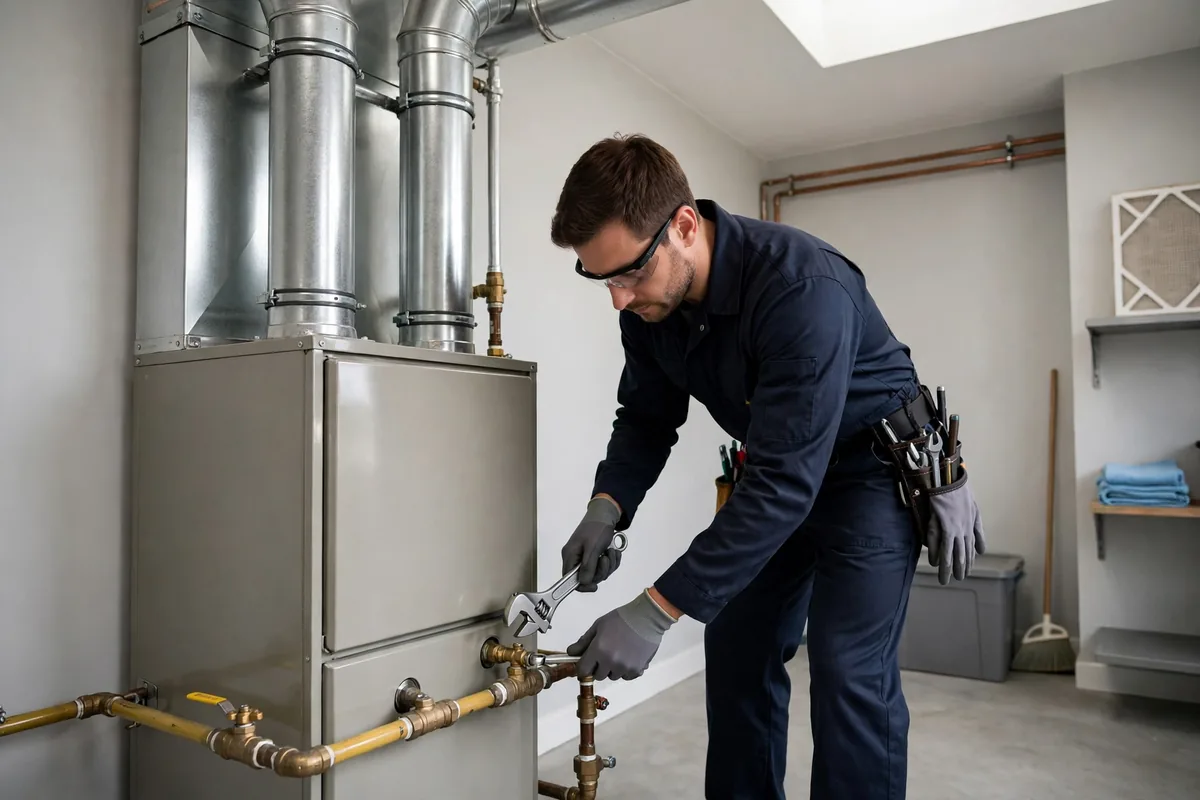
Gas suits homes with a natural gas supply and ductwork already in place. It heats quickly, handles deep cold well, and pairs with the duct systems most Wyoming homes already have. For a home on a gas main, a gas furnace is usually the straightforward choice, and keeping it maintained is simpler than converting to another fuel.
Homes beyond the gas mains use propane instead, covered on our propane furnace services page, while homes with strong electrical capacity may suit electric heat, covered on our electric furnace services page. The fuel decision follows the house: its supply, its ducts, and its winter load. We never recommend converting fuels unless the house genuinely gains from it.
Smell gas? Leave the house and call for help from outside at once.
Call (307) 309-8601Keeping it well
A yearly maintenance and tune-up visit is the backbone: burner cleaning, sensor cleaning, ignition testing, and a vent check. Between visits, change the filter monthly in winter and keep the furnace room clear. Watch for the warning signs: short cycling, a new smell, soot near the burner, or a flame that looks different from the steady blue you are used to.
If the furnace starts short-cycling or dies repeatedly, call rather than resetting it again and again. Repeated resets hide the fault pattern and can flood the burner area with unburned gas. Our emergency furnace repair page explains what to do on a cold night when a gas furnace quits.
How it works
A gas furnace heats in a chain, and each link has a sound and a timing. The step where the chain stops names the fault.
The thermostat signals that the rooms have fallen below the setting, and the furnace sequence begins.
The inducer fan runs first, clearing the vent path before any fuel is lit.
The ignitor glows hot, ready to light the burner the moment fuel arrives.
The valve opens and fuel reaches the burner, where the ignitor lights it.
The sensor sits in the flame and confirms it is lit, so the control board keeps the gas flowing.
The blower starts and pushes warmed air through the ducts to the rooms.
Up close
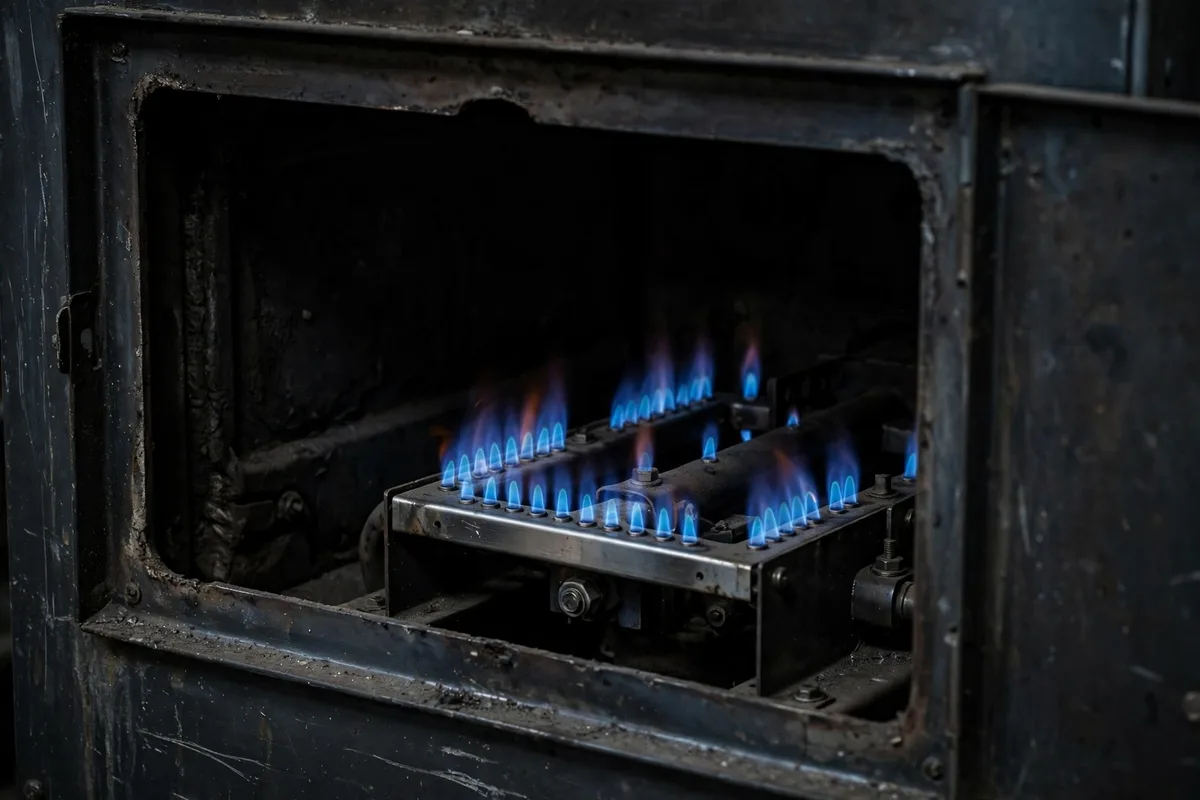
The flame tells the story of a gas furnace. Steady and blue means the mix is right. A flame that lifts, wavers, or turns yellow says the burner is dirty or the mix is wrong, and that needs correcting, not ignoring.
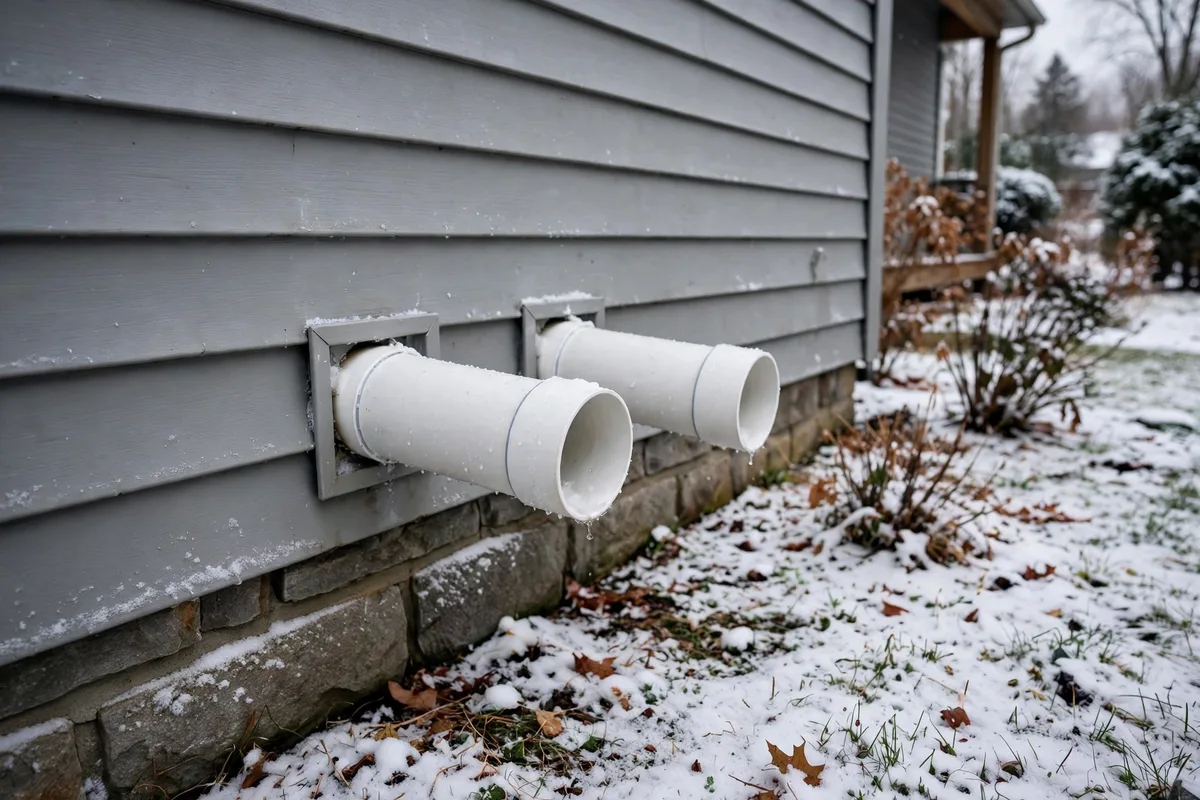
Venting is the part of a gas furnace most exposed to Wyoming weather. Wind can disturb it and snow can block it, which is why the outside pipes are checked as carefully as the burner inside.
Reading the symptoms
Gas faults show up as patterns: lighting then dying, weak heat, or a furnace that will not stay lit. Each pattern points at a different link in the chain.
| Symptom | What it usually means | What to do |
|---|---|---|
| Lights, then dies within a minute | A dirty flame sensor is the usual cause: soot makes the control board think the flame failed, so it shuts the gas off. | Cleaning the sensor usually restores normal running; if it does not, the fault may be in the sensor wiring or the control board. |
| Ignitor glows but the burner never lights | A weak ignitor, or a gas valve that opens late or not at all. | Each fault has its own test, and telling them apart is the core skill of gas furnace work. |
| Lazy yellow flame, or soot around the burner | The gas and air mix is wrong, or the burner is dirty. | Get a prompt look, since poor combustion can produce carbon monoxide. Do not ignore a flame that changed colour or shape. |
| Furnace stops after wind or snow | Venting disturbed by wind or blocked by snow. | Check the outside pipes for snow and drift, and note the weather when you describe the fault. |
Comparing the faults
Four faults cause most gas furnace trouble in Wyoming, and each one announces itself differently.
| Fault | What you notice | What the test shows |
|---|---|---|
| Dirty flame sensor | The furnace lights, runs for a few seconds, then dies, and the cycle repeats. | Cleaning the sensor fixes it, and it is one of the quickest repairs we make. |
| Weak ignitor | The ignitor glows but never quite lights the burner. | The ignition sequence stops at the lighting step, which names the fault directly. |
| Tired gas valve | The valve opens late or not at all, so the burner is starved or never lit. | Fuel timing and pressure tests show the valve, not the ignitor, as the failed link. |
| Venting trouble | The furnace never gets past the inducer, or stops when wind picks up. | A vent disturbed by wind or blocked by snow explains a furnace that otherwise tests sound. |
The usual cause is a dirty flame sensor. It proves the burner is lit, and soot on its surface makes the control board think the flame failed, so it shuts the gas off. Cleaning the sensor usually restores normal running. If cleaning does not fix it, the fault may be in the sensor wiring or the control board.
A steady blue flame is normal, while a lazy yellow flame can mean the gas and air mix is wrong or the burner is dirty. It deserves a prompt look, since poor combustion can produce carbon monoxide. Do not ignore a flame that changed color or shape, and keep carbon monoxide alarms working.
Leave the house at once, without switching lights or appliances, and call for help from outside. Do not try to find the leak yourself and do not relight anything. Gas leaks are handled as emergencies, and the house should stay empty until it is checked.
The classic pattern is a burner that lights, runs for a few seconds, then shuts off, repeating the cycle. The furnace may also lock out after several tries. A technician can test the sensor directly, and cleaning it is often the whole fix.
Yes, every year. Vents carry combustion gases out of the house, and a blocked, damaged, or wind-disturbed vent can push those gases back inside. Snow, nests, and rust all block vents, so the vent path is checked during maintenance and safety visits.
No, not normally. Modern gas furnaces need electricity for the inducer fan, ignition, controls, and blower. A gas supply alone will not run one. If outages are common where you live, ask us about backup heat planning before winter.
Short cycling means the furnace heats in brief bursts instead of steady runs. A dirty filter, an overheating heat exchanger, a faulty limit switch, or an oversized unit can all cause it. The cause matters, since each one needs a different fix, and guessing wastes time.
Often, when the home already has gas and ducts. The new unit should be sized to the house as it stands today, not copied from the old label. Our replacement page explains how sizing and venting are checked before a new gas unit is fitted.
Once a year, before the heating season. Gas furnaces involve flame, fuel, and venting, so the yearly visit checks burner condition, ignition, sensors, venting, and the heat exchanger. Homes with older gas units benefit most from keeping that rhythm.
Tell us what the burner does, what the flame looks like, and whether any alarm has sounded. We will talk through what is safe to check and what needs a visit, and we treat gas smells as emergencies.
Call (307) 309-8601