01
Emergency Furnace Repair
A Douglas night call on a plains cold snap starts with the thermostat battery and the furnace filter, since ranch houses far from town often wait longest for a part, and the simple checks come first.
Jackalope town heat
Douglas sits on the North Platte River in Converse County, a ranching and energy town known for its jackalope, where open plains meet river country and winter wind runs along the water. Homes here mix historic downtown houses, ranch homes, and newer subdivisions, and furnaces face plains cold, river wind, and long nights.
The furnace pattern in Douglas follows the river and the ranches: town homes with old ductwork, ranch houses on open ground where wind steals heat, and manufactured homes mixed through town and country. We check the furnace, the ducts, and the fuel together, because a ranch-country home can fail from any of the three on a cold night.
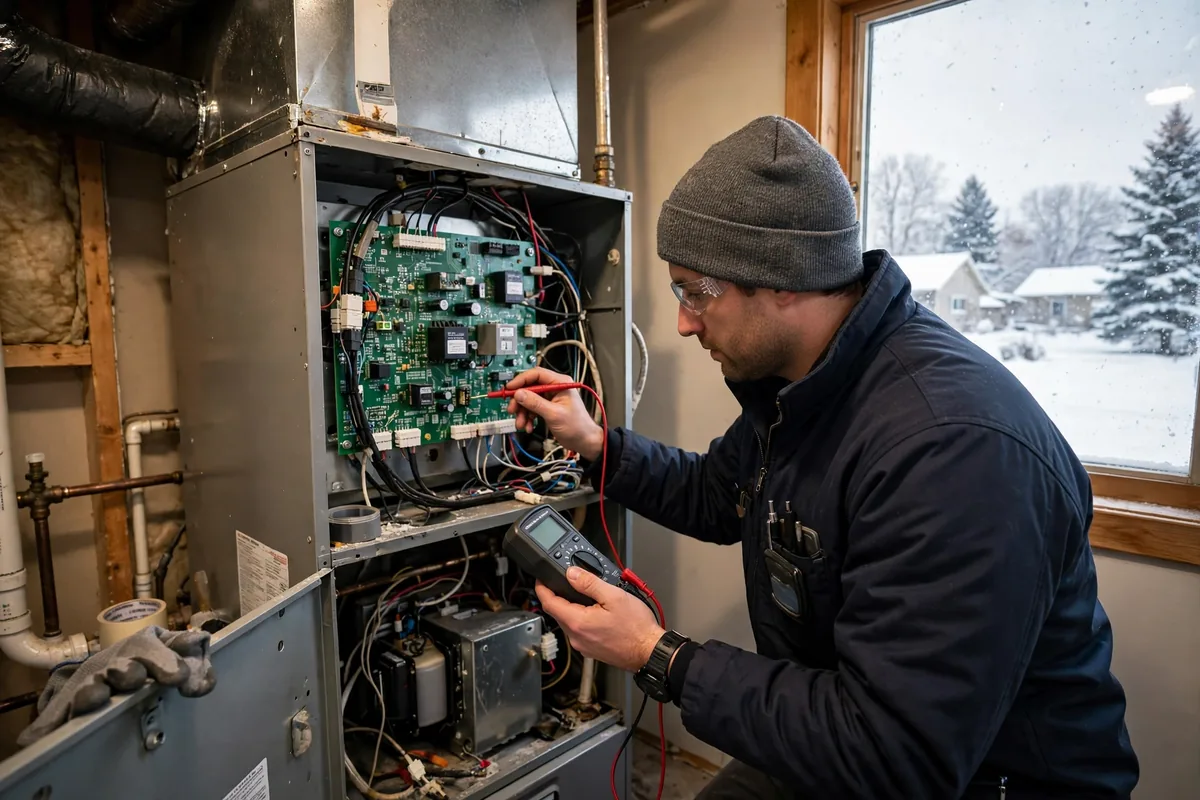
Douglas areas
Downtown Douglas and Jackalope Square hold the oldest homes, the North Platte River side holds river-country homes with open exposure, and the north, south, east, and west edges spread toward open plains and ranch land. Fort Fetterman sits northwest of town and marks the historic edge of the service area, and each direction carries its own housing mix.
Formal named subdivisions are few in Douglas, so we describe areas by direction and landmark rather than inventing names. When you call, tell us the nearest landmark and the house type, and we will know whether to expect an old downtown furnace, a ranch unit, or a newer vented system.
We serve Douglas across Converse County, including these areas. Formal named subdivisions are few here, so areas are described by direction and landmark.
Downtown DouglasJackalope Square areaNorth DouglasSouth DouglasEast DouglasWest DouglasNorth Platte River areaFort Fetterman area
Douglas ZIP codes we cover: 82633.
Douglas seasons
Douglas fall preparation means a tune-up before the first plains cold snap, with the burner cleaned, the ignition tested, and the ranch-house filters changed while the weather still allows an unhurried visit.
Spring brings river runoff and damp lower levels that matter for basement furnaces, and summer is the calm window for planned replacements and duct work. The EPA indoor air guidance at epa.gov explains why clean filters and sound venting matter for indoor air, and we check both on every Douglas visit.
Douglas home cold on a plains night? Call us and say which rooms lost heat first.
Call (307) 309-8601Douglas landmarks
Douglas landmarks are easy anchors: Jackalope Square downtown with its giant jackalope, Fort Fetterman Historic Site northwest of town, and the North Platte River running past town, with the highway corridors toward Casper and Glenrock nearby. Most homes sit between downtown and the town edges, and most furnace calls come from that band.
Those landmarks help us place a home quickly. Downtown homes tend to be older, river-side homes sit in open-country cold, and edge homes face open wind. A landmark near your address gives us a useful head start on the visit.
Three Douglas landmarks anchor our visits: Jackalope Square downtown, Fort Fetterman Historic Site, and the North Platte River. Most Douglas furnace calls fall near one of them.
Douglas homes
Douglas housing mixes historic homes near Jackalope Square and downtown with ranch homes on the edges and newer subdivisions on the town sides. The downtown homes often have old ductwork and tall rooms, ranch homes have larger footprints and older furnaces, and newer homes sit on open lots where wind steals heat from one side.
Ranching and energy shape Douglas households, with ranch families who keep irregular hours and energy workers on shift schedules. A home that needs bedrooms warm in the morning after a night shift cannot rely on a standard daytime thermostat program, so we set controls around the real schedule on Douglas visits.
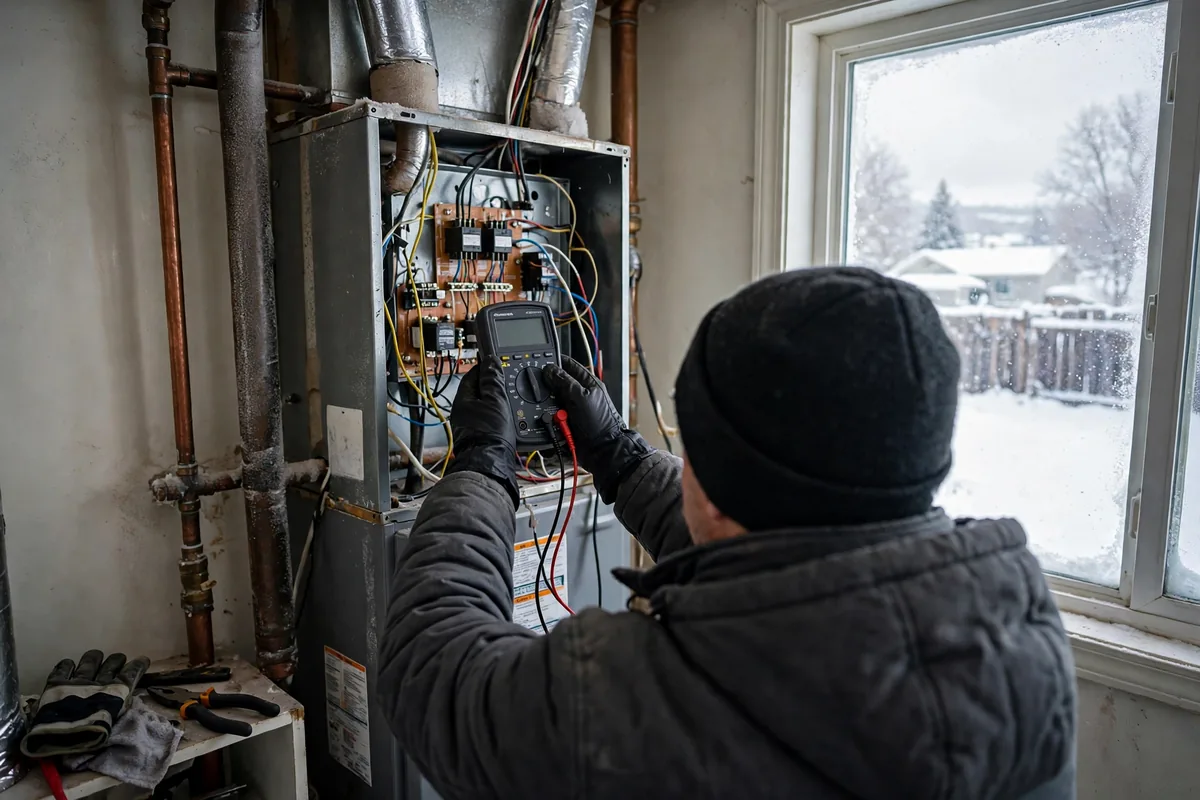
Douglas river country
Plains cold settles over open ground on still nights, while wind runs down the river corridor on other days, so furnaces here face both patterns in the same week. A town home may sit sheltered while a ranch house a few miles out faces open wind, and a furnace that keeps the town home warm can fall behind on an exposed ranch lot. We ask about exposure on Douglas calls, because it changes the diagnosis.
Ranch houses add a second Douglas pattern: larger footprints, outbuildings, and propane tanks on rural lots where cold and distance combine. A rural Douglas call therefore checks fuel supply and furnace together, since a sound furnace on an empty tank heats nothing, and a weak regulator shows up first on the coldest nights.
Furnace help
Douglas needs river-country furnace work for town homes, ranch houses, and rentals. Each line below is written for this river town.
01
A Douglas night call on a plains cold snap starts with the thermostat battery and the furnace filter, since ranch houses far from town often wait longest for a part, and the simple checks come first.
02
Installing a furnace in a Douglas ranch house means planning ducts for a larger footprint and exposed rooms, not just swapping the cabinet.
03
A Douglas ranch furnace patched three winters running usually has a cracked exchanger or a dying board, and at that point a new unit with a fresh vent run spares the household another winter of emergency calls.
04
A Douglas fall tune-up covers the burner, the blower, and the ranch-house duct runs, because a ranch furnace that runs all winter cannot afford a weak start.
05
Gas furnaces heat much of Douglas town, and river wind plus pooled cold make venting and combustion checks the top priorities.
06
Douglas rental electric furnaces get hard use from tenants who crank the thermostat, and a burned-out element from constant high demand is the usual find.
07
Ranch homes outside Douglas on propane sit far from the tank fill route, so a fall check of tank level and regulator condition prevents a January surprise.
08
Douglas ranch houses ask their blowers to push air through long runs to distant bedrooms, and a blower that hums but moves little air usually has a failing capacitor, not a dead motor.
09
On a Douglas ranch call, exchanger checks come with a carbon monoxide alarm test, because ranch houses are large, old, and often heated by a single aging unit.
10
A thermostat in a warm Douglas hallway misreads cold river-side rooms, so we check placement on homes with one always-cold side.
11
Douglas downtown duct runs snake through old additions, and a run that dips under a porch loses heat to open air before reaching the back rooms.
12
A Douglas safety inspection puts the chimney and the sidewall vents first, since river-country wind can push exhaust back down a flue that drafted fine in summer.
13
Douglas manufactured homes on ranch lots run long propane lines from distant tanks, so we test line pressure at the furnace before blaming the burner.
14
Douglas ranch supply stores and county offices heat big open rooms with high ceilings, so we size commercial units for the space people actually use, not the footprint on paper.
15
Zone controls help a Douglas home with a cold river side and a warm sheltered side, by sending heat where the open-country cold settles.
Home types
The furnace pattern in Douglas follows the river and the ranches, and the house type changes what we look at first. Use this guide to see where your home fits.
| Home type | What to watch | What a visit checks |
|---|---|---|
| Historic downtown home | Older homes with old ductwork, and rooms starved by runs added over time. | Furnace and ductwork together, with the rooms at the end of long runs. |
| North Platte river-side home | Open exposure and river wind running along the water, with long nights. | Furnace, ducts, and fuel together, since a ranch-country home can fail from any of the three. |
| Ranch house on open ground | Open plains and ranch land where wind steals heat from every side. | Exposure and duct balance alongside the furnace itself. |
| Manufactured home | Compact systems mixed through town and country. | The compact unit and its duct connections, not just the cabinet. |
Through the seasons
Douglas fall preparation means a tune-up before the first plains cold snap, while the weather still allows an unhurried visit. These checks carry that preparation through the year.
A tune-up with the burner cleaned and the ignition tested, before the first plains cold snap settles in.
Ranch-house filters get changed while the weather still allows an unhurried visit, since a loaded filter starves the blower.
Find the pipes that exit through a side wall or the roof, and note where river wind or snow could disturb them.
Set it to heat and warmer than the room, and check that it reads the living space rather than a cold wall.
Use the test button on all alarms and put fresh batteries in any that are low, before heating season starts.
Spring brings river runoff and damp lower levels that matter for basement furnaces.
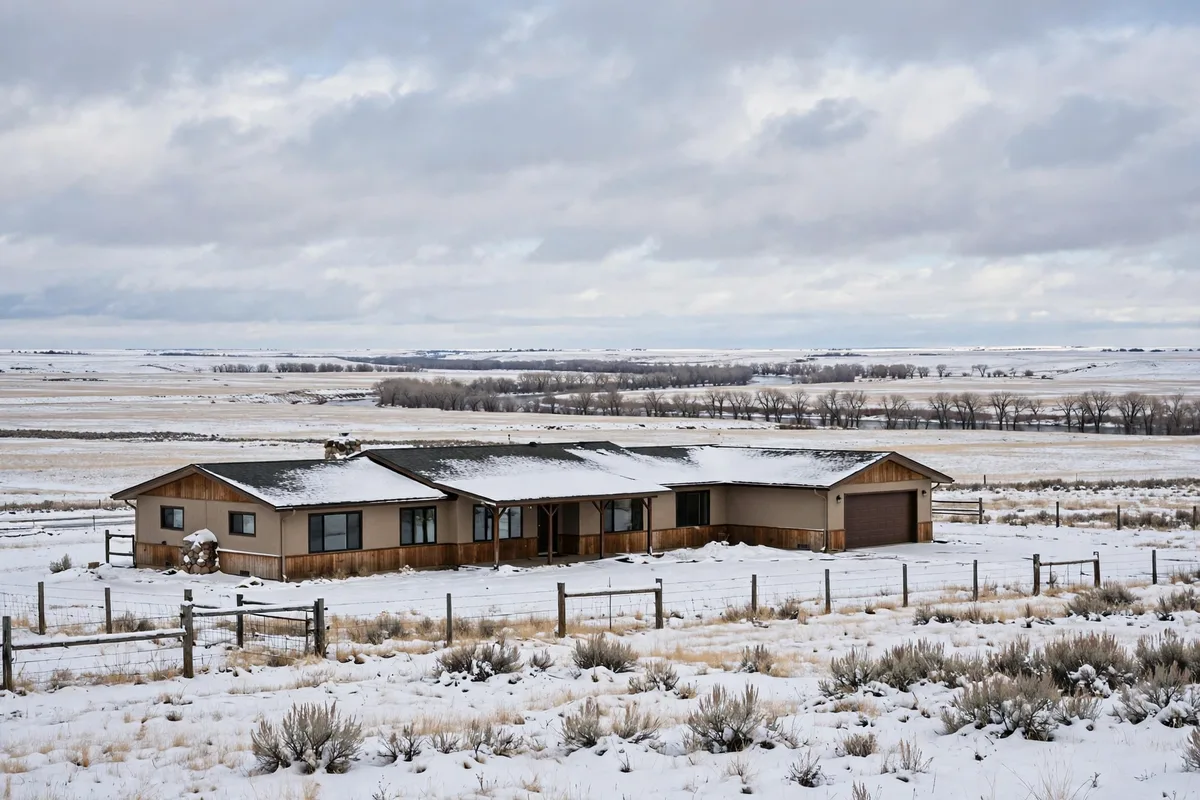
Douglas sits on the North Platte River in Converse County, a ranching and energy town where open plains meet river country and winter wind runs along the water. Homes here mix historic downtown houses, ranch homes, and newer subdivisions.
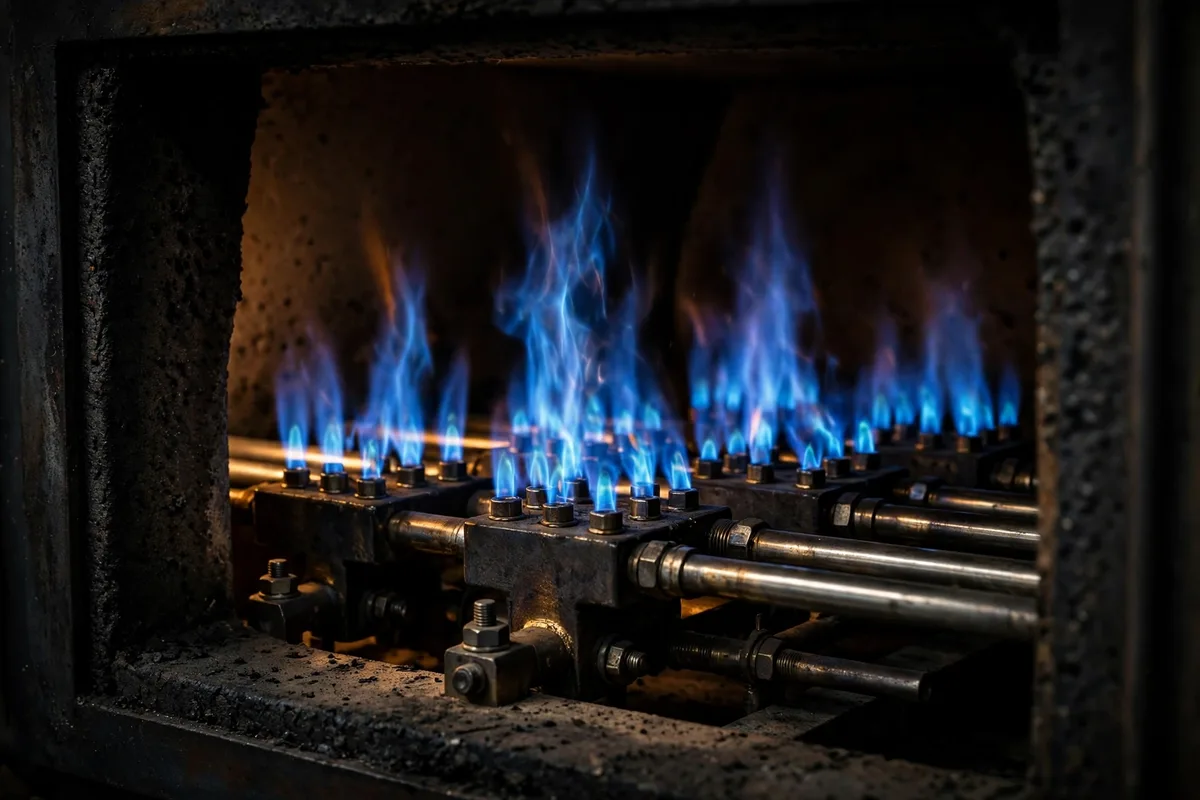
We check the furnace, the ducts, and the fuel together, because a ranch-country home can fail from any of the three on a cold night. A burner that lights cleanly and holds is the first link in that chain.
On the visit
A Douglas home gone cold on a plains night usually needs the same chain checked in the same order, so the first failed link explains everything after it.
Make sure the call for heat is actually getting through to the furnace, and that the setting sits above the current room temperature.
Is the furnace switch on, the breaker set, and power reaching the unit?
Does the burner light when it should, and is fuel reaching it at the right time?
Has river wind or snow disturbed the venting, since a blocked vent trips a safety switch and locks the furnace out?
Is warm air moving through the ducts, and are the river-side and open-ground rooms getting their share?
Has the switch tripped for an outside reason, like a blocked vent or an overheated exchanger, instead of failing on its own?
Local answers
Ranch houses sit on open ground where open-country wind strips heat from walls and roofs, while town homes shelter each other. Larger footprints and older furnaces add to the gap. Air sealing, duct balancing, and a furnace matched to the exposed lot help more than simply raising the thermostat, which only makes the furnace run longer without fixing the loss.
Homes near the North Platte in Douglas sit in open river-country wind, so their furnaces run longer than sheltered town homes on the same night. That extra run time wears igniters and blowers sooner, and a fall tune-up plus sealed ducts gives the furnace more margin when the coldest nights arrive.
The river-side rooms face wind and pooled cold, while the sheltered side stays warm, and long duct runs lose heat before reaching far rooms. Balancing dampers, sealing duct leaks, and zoning the cold side usually evens the house out better than raising the thermostat for the whole house.
A Douglas rental that changed tenants over summer often hides a furnace that ran hard last winter and sat dirty since, so a fall visit that changes the filter, cleans the sensor, and tests the safety controls prevents the January call from a new tenant in a cold house. When the unit is past reliable repair, swapping it during a vacancy beats an emergency visit with tenants home.
A Douglas furnace that cannot finish a heating cycle often has a filter choked with ranch dust, a return vent blocked by furniture, or a limit switch cutting out from overheating. The stop-start pattern strains the motor and the igniter, and it leaves distant bedrooms cold while the living room overheats. Clearing returns and changing the filter are the safe first steps before a technician visit.
September is the smart month in Douglas, before plains cold arrives and the schedule fills, since a fall visit can swap a weak igniter or a tired capacitor while the work is still unhurried. Winter emergency work happens, but a planned September check is what keeps a ranch furnace from failing on the coldest night.
Call with your part of Douglas, the age of the furnace, and the sound or symptom it is making, and we will line up the safe checks and a visit time.
Call (307) 309-8601 Contact Frontier Heating