01
Emergency Furnace Repair
A Riverton night call when valley cold deepens starts with ignition and fuel, since a farm house on propane and a town home on gas fail for different reasons on the same night.
Wind River town
Riverton sits in the Wind River Valley in Fremont County, the largest town in the county, where the Wind River and the Little Wind River meet and irrigated farmland spreads around a mid-century town. At about 4,951 feet, its furnaces face valley cold, river wind, and long winter nights, serving town homes, farm houses, and college families alike.
The furnace pattern in Riverton follows the valley: older town homes with long duct runs, farm houses on open ground where wind steals heat, and manufactured homes mixed through town and country. We check the furnace, the ducts, and the fuel together, because a valley home can fail from any of the three on a cold night.
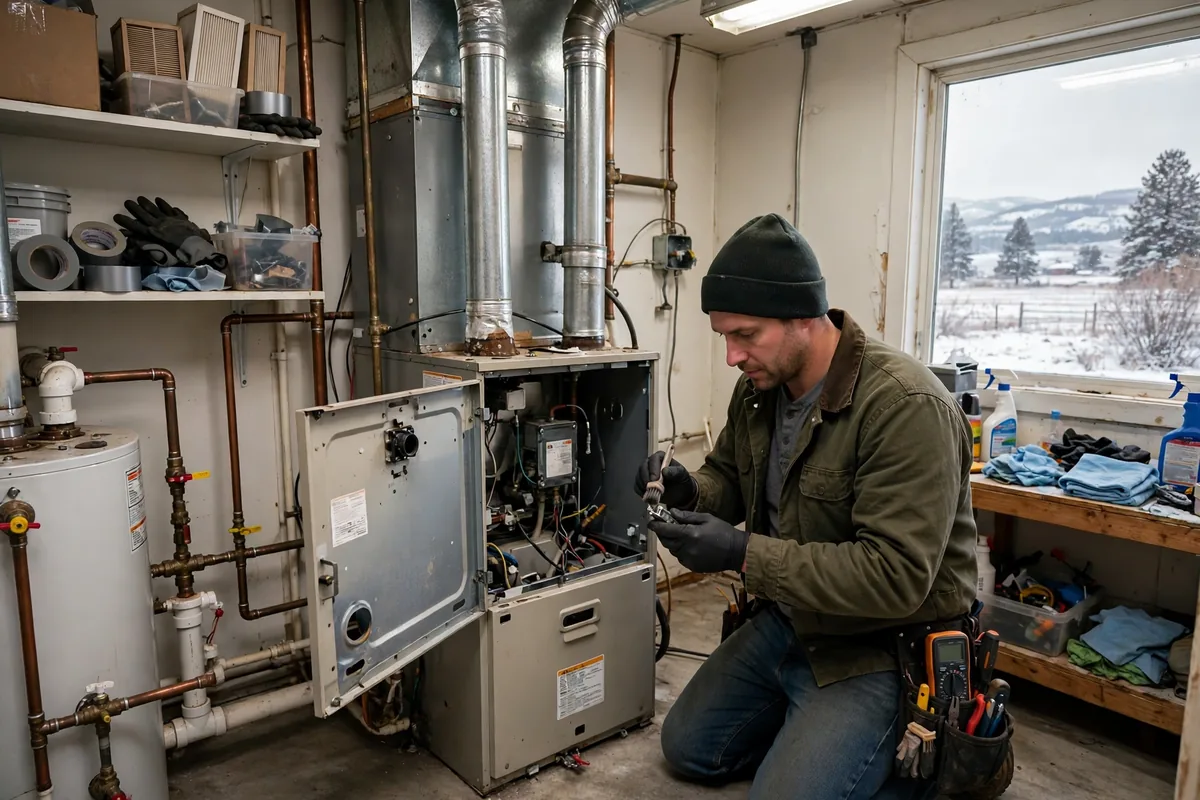
Riverton areas
Downtown Riverton holds the oldest commercial streets and nearby homes, the college area mixes rentals with family streets, and the north, south, east, and west sides spread toward the rivers and the farmland. The Wind River corridor and the roads toward Lander and the reservation mark the natural edges of the service area, and each direction carries its own housing mix.
Formal named subdivisions are few in Riverton, so we describe areas by direction and landmark rather than inventing names. When you call, tell us the nearest landmark and the house type, and we will know whether to expect an old basement furnace, a manufactured-home unit, or a newer vented system.
We cover Riverton from downtown and the college side out along the valley roads toward the rivers, including town homes, farm houses, and rentals.
Downtown RivertonNorth RivertonSouth RivertonEast RivertonWest RivertonCentral Wyoming College areaWind River corridor area
Riverton ZIP codes we cover: 82501.
Riverton homes
Riverton housing mixes mid-century town homes with later subdivisions and manufactured homes, plus farm houses on irrigated land outside town. Town homes often have basements and ductwork added over decades, while farm houses have larger footprints, older furnaces, and outbuildings that draw attention away from the main house system.
The college shapes Riverton heating too, with student rentals and staff homes that turn over and need heat working before cold arrives. A rental furnace that sat through summer and then runs hard in October is a classic Riverton failure, and a fall check that cleans the flame sensor and tests ignition prevents most of those calls.
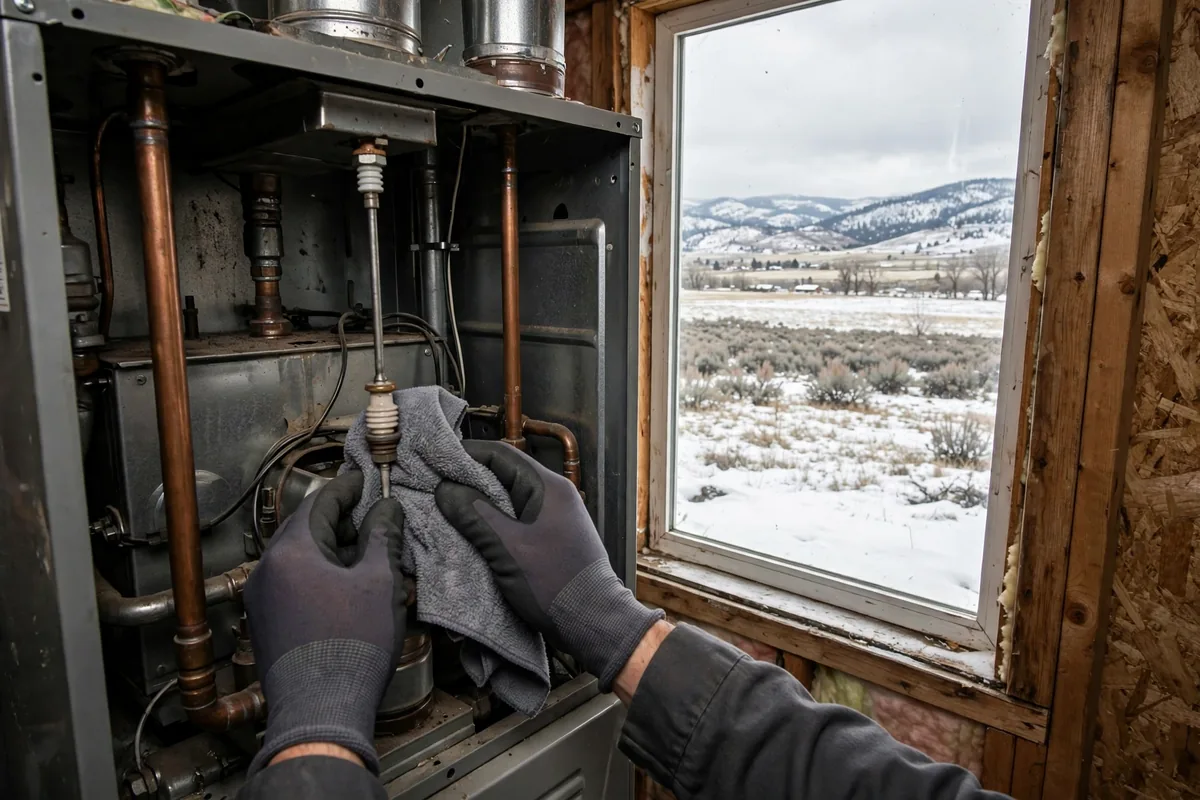
Riverton furnace behind on a still valley night? Call us with the symptom and the house age.
Call (307) 309-8601Riverton landmarks
Riverton landmarks are easy anchors: the Riverton Museum downtown, the Wind River Heritage Center nearby, and the Wind River itself running through the valley, with the college on the edge of town and highways running toward Lander, Casper, and Jackson. Most homes sit between downtown and the valley roads, and most furnace calls come from that area.
Those landmarks help us place a home quickly. Downtown homes tend to be older, college-area homes mix rentals and family houses, and valley-road homes tend to be rural and propane-heated. A landmark near your address gives us a useful head start on the visit.
Three Riverton landmarks anchor our visits: the Riverton Museum downtown, the Wind River Heritage Center, and the Wind River itself. Most Riverton furnace calls fall near one of them.
Riverton seasons
Riverton homeowners get the most from a September visit, when a technician can clean the flame sensor, test the igniter, and walk the duct runs before valley cold locks in for months.
Spring brings river runoff and damp basements, which matters for furnaces and ducts below grade, and summer is the calm window for planned replacements and duct work. ENERGY STAR heating guidance at energystar.gov covers the same maintenance checks we run on Riverton visits.
Riverton valley
Riverton valley cold pools along the rivers on still nights, while wind runs down the valley on other days, so furnaces here face both patterns in the same week. A town home may sit sheltered while a farm house a few miles out faces open wind, and a furnace that keeps the town home warm can fall behind on an exposed farm lot. We ask about exposure on Riverton calls, because it changes the diagnosis.
Farm houses add a second Riverton pattern: outbuildings, shops, and larger footprints that share a heating system or sit on the same property, plus propane tanks on rural lots where cold and distance combine. A rural Riverton call therefore checks fuel supply and furnace together, since a sound furnace on an empty tank heats nothing, and a weak regulator shows up first on the coldest nights.
Furnace help
Riverton needs valley furnace work for town homes, farm houses, and rentals. Each line below is written for this valley town.
01
A Riverton night call when valley cold deepens starts with ignition and fuel, since a farm house on propane and a town home on gas fail for different reasons on the same night.
02
Installing a furnace in a Riverton farm house means planning ducts for a larger footprint and exposed rooms, not just swapping the cabinet.
03
A Riverton rental furnace repaired every turnover eventually eats more in callbacks than a planned swap during a vacancy, and landlords who plan it sleep better in January.
04
A Riverton fall tune-up checks valley-home airflow room by room, since a furnace that heats the living room but not the far bedroom will fail the household on the first still night.
05
Gas furnaces heat much of Riverton town, and valley wind plus pooled cold make venting and combustion checks the top priorities.
06
Riverton college-rental electric furnaces cycle constantly with student schedules, and a worn contactor there clicks loudly before it quits.
07
Farm homes outside Riverton on propane face valley cold and long supply runs, so tank and regulator health get checked first on rural calls.
08
Riverton valley blowers work against long duct runs in mid-century homes, and a blower that runs but never satisfies the thermostat may be undersized for the ductwork, not broken.
09
In Riverton rentals, exchangers fail quietly between tenants, so a move-in safety check that includes the exchanger protects the next household.
10
A thermostat in a warm Riverton hallway misreads cold valley-side rooms, so we check placement on homes with one always-cold side.
11
Riverton mid-century duct runs often end at registers blocked by later remodels, and a room with no airflow usually has a register hidden behind a built-in, not a furnace fault.
12
A Riverton safety inspection tests draft with the house closed up, because valley air on a still night can stall a chimney that worked when windows were open.
13
Riverton manufactured homes on valley lots often have ducts under the floor that flood in spring runoff, and a spring no-heat call starts with a duct inspection.
14
Riverton clinics and county offices serve steady public traffic through winter, and their commercial furnaces get filter schedules matched to dust and foot traffic.
15
Zone controls help a Riverton home with a cold valley side and a warm sheltered side, by sending heat where the valley cold settles.
Symptoms
Riverton furnaces serve town homes, farm houses, and college families, and the valley pattern shows up in the symptoms: long duct runs, river wind, and furnaces that sat idle before a hard October run.
What it usually means: The chain has stopped at an early link, such as power, ignition, or a tripped safety switch. What to do: Check the thermostat setting and the breaker first, then call and describe what the furnace is doing.
What it usually means: A dirty flame sensor often tells the furnace the flame went out, so the burner shuts down. What to do: Note how long the burner stays lit, and do not keep resetting the furnace over and over.
What it usually means: The burner may not be holding, or air may be moving without being heated. What to do: Check the filter, then call, since cool air in valley cold can turn into no heat.
What it usually means: Town homes often have ductwork added over decades, and farm houses have larger footprints, so the far rooms starve first. What to do: Tell us which rooms lose heat first and how old the house is.
What it usually means: A rattle, squeal, or grinding sound that is new usually means a part is wearing out. What to do: Note when the noise happens and book a visit before the next cold stretch.
What it usually means: River wind steals heat from a valley home faster than the furnace replaces it, and a weak part shows up on those nights. What to do: Tell us whether the trouble started on a windy night, and which side of the house is cold.
Home types
The furnace pattern in Riverton follows the valley, and the house type changes what we look at first. Use this guide to see where your home fits.
| Home type | What to watch | What a visit checks |
|---|---|---|
| Mid-century town home | Basements and ductwork added over decades, with some rooms starved of heat. | Duct runs, dampers, and return air alongside the furnace itself. |
| Valley farm house | Larger footprint and open ground where wind steals heat, plus outbuildings drawing attention away. | Furnace, ducts, and fuel together, since a valley home can fail from any of the three. |
| Manufactured home | Compact systems mixed through town and country, with crossover ducts to check. | The compact unit and its duct connections, not just the cabinet. |
| College-area rental | Turnover between tenants, and furnaces that sat through summer then run hard in October. | Flame sensor and ignition first, since a fall check there prevents most of those calls. |
Options
Most Riverton homes need one of three kinds of help, and the right one depends on the house, its ducts, and how the valley wind hits it.
Homes it suits best: Homes where one part has given out and the rest of the system is sound.
What valley cold does to it: Long winter nights lean hard on the repaired part, so the visit checks the chain around it too.
What to keep an eye on: Whether the same symptom returns on the next windy night.
Homes it suits best: Town homes with long duct runs and farm houses with larger footprints.
What valley cold does to it: A clean burner and balanced ducts keep the far rooms warm when river wind steals heat.
What to keep an eye on: Filters and the rooms at the end of long runs.
Homes it suits best: Homes where the furnace keeps failing and parts are getting scarce.
What valley cold does to it: A new system is planned around the house and its ducts, not just the cabinet.
What to keep an eye on: Ductwork and fuel supply, so the new unit is not asked to do a duct system's job.
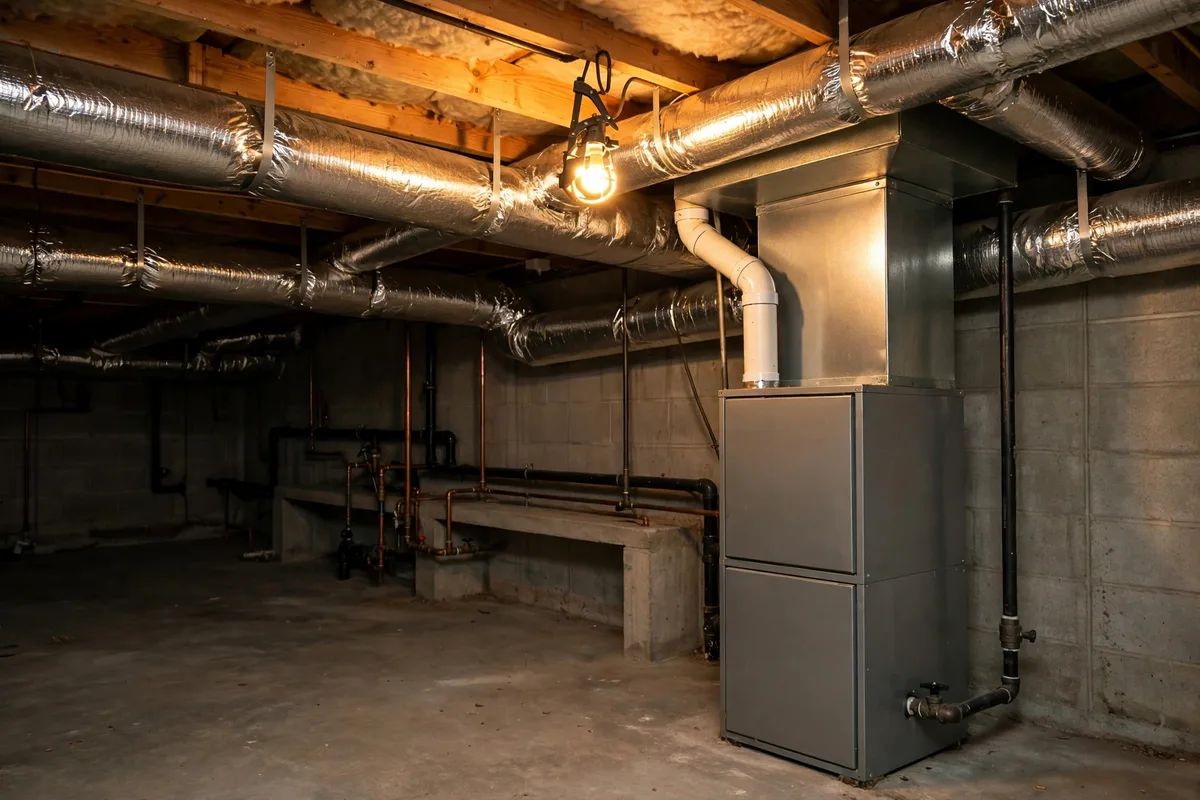
Town homes often have basements and ductwork added over decades, while farm houses have larger footprints and older furnaces. We check the furnace, the ducts, and the fuel together, because a valley home can fail from any of the three on a cold night.
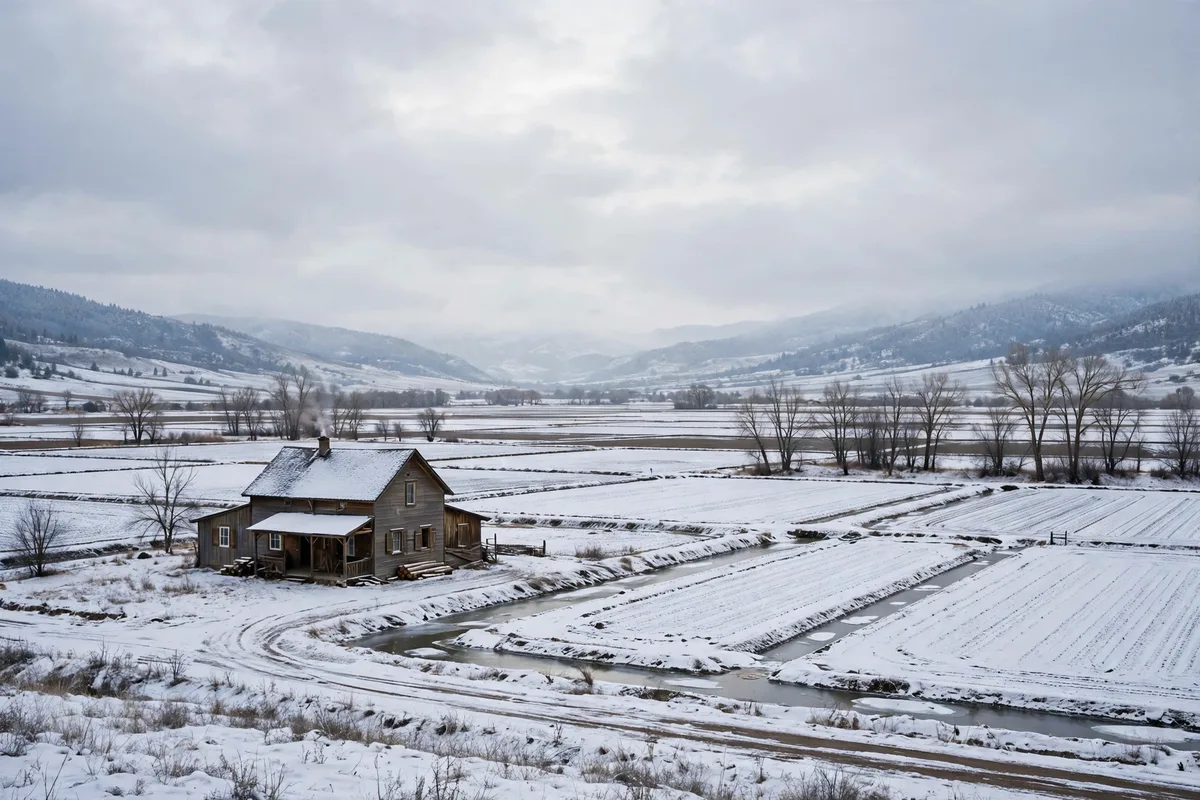
Riverton sits in the Wind River Valley, where the Wind River and the Little Wind River meet and irrigated farmland spreads around a mid-century town. Farm houses on open ground face valley cold and river wind, and a furnace there has to hold a larger footprint through long winter nights.
Local answers
Farm houses sit on open ground where valley wind strips heat from walls and roofs, while town homes shelter each other. Larger footprints and older furnaces add to the gap. Air sealing, duct balancing, and a furnace matched to the exposed lot help more than simply raising the thermostat, which only makes the furnace run longer without fixing the loss.
A rental furnace that sat through vacancies often needs a filter change, a burner and flame-sensor cleaning, and a safety check before winter. Those steps fix most neglected-unit problems. If the unit is very old and parts keep failing, planning a replacement during a vacancy beats a midwinter no-heat call with tenants in the house.
The valley-side rooms face wind and pooled cold, while the sheltered side stays warm, and long duct runs lose heat before reaching far rooms. Balancing dampers, sealing duct leaks, and zoning the cold side usually evens the house out better than a larger furnace or a higher thermostat setting.
Riverton homes near the Wind River sit in pooled valley air on still nights, so their furnaces work longer than homes on higher ground nearby. The added hours wear igniters and blowers sooner, and a fall tune-up with sealed ducts matters more here, because the furnace has little spare capacity on the coldest nights.
A Riverton furnace that runs in bursts usually has an airflow problem: a clogged filter, a crushed duct, or a return too small for the house. The unit overheats, the limit switch trips, and the cycle repeats, wearing parts and leaving rooms uneven. Replacing the filter and clearing returns are safe first steps, and a furnace still cycling after that needs a professional airflow check.
Riverton homeowners do best booking in early fall, while valley cold is still weeks away and technicians can test ignition, clean sensors, and walk the ducts without rushing. A weak part found in September is a routine fix; the same part found in January is a cold house and a hard night.
Reach us with your neighborhood direction, the fuel your home uses, and the rooms that stay cold, and we will plan the visit around those details.
Call (307) 309-8601 Contact Frontier Heating